Saira Imran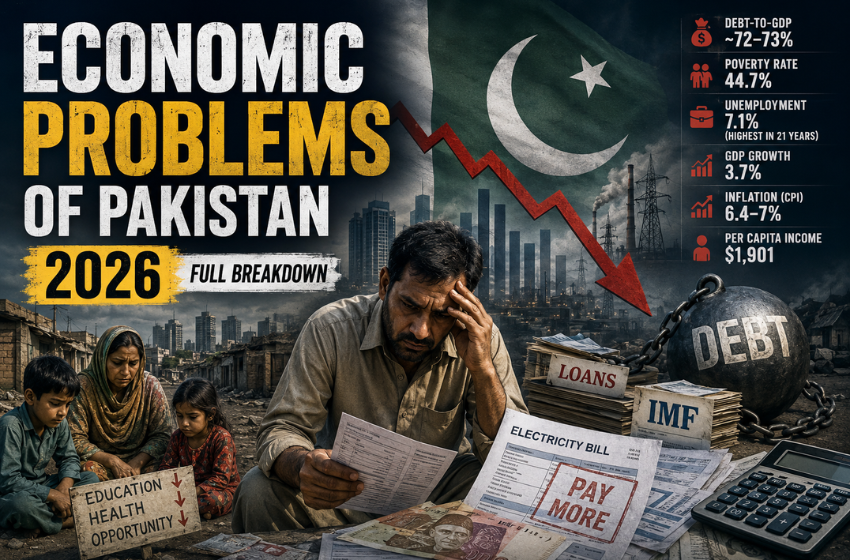
Economic Problems of Pakistan 2026: Full Breakdown
Major economic problems of Pakistan in 2026 include a debt-to-GDP ratio near 68.9% in FY26 from 70.7% in FY25, nearly 45% of the population below the poverty line, GDP growth of only 3.7%, a narrow tax base, punishing energy tariffs, and unemployment at a 21-year high. These problems are not separate. Each one feeds the next, and ordinary Pakistanis take the hit for all of them.
Pakistan’s GDP crossed $452 billion in 2026. The government celebrated. Meanwhile, per capita income sat at $1,901 per person per year, barely enough to cover rent in most cities, let alone everything else. Growth came in at 3.7%, which the government itself had projected at 4%. That shortfall may sound minor, but it is not minor for the family whose electricity bill jumped again this month, whose grocery budget no longer stretches to the end of the week, or whose son finally gave up and left for Dubai.
This is Pakistan’s real economic problem in 2026. It is not that the numbers look bad. It is that the numbers look acceptable while millions of people are not.
This article goes through each major problem one by one, and shows how they connect. Because understanding them separately is not enough. They built this crisis together, and they will have to be solved together.
List of Major Economic Problems of Pakistan
| Problem | 2026 Status |
|---|---|
| GDP Growth | 3.7% — below the 4% target |
| Per Capita Income | $1,901 |
| Inflation (CPI) | Rising again, toward 11.7% |
| Poverty Rate | 44.7% below the poverty line |
| Unemployment | 7.1% — highest in 21 years |
| Debt-to-GDP Ratio | 68.9% in FY26 from 70.7% in FY25 |
| External Debt | $137.6 billion to $138 billion |
| Tax-to-GDP Ratio | 10% to 10.5%, Among the lowest in Asia |
| FBR Revenue FY2024–25 | Rs. 11,744.3 billion |
| IMF Loan Program | $7 billion, active since September 2024 |
1. The Debt Trap: Borrowing to Pay Yesterday’s Loans
The core problem: Pakistan is not borrowing to build anything. It is borrowing to avoid defaulting on what it already owes.
Pakistan’s external debt has reached $137.56 billion to $138 billion, which is 35.1% of the entire economy. Of that, public external debt accounts for $100.619 billion. The State Bank of Pakistan has flagged $30.35 billion in repayments falling due in 2025 and 2026 alone. And it does not stop there; over $100 to $114 billion in repayments come due by 2029.
Total government debt, including what is owed to the IMF, sits near 72–73% of GDP. Factor in government-guaranteed obligations and it climbs to 76%.
What this means for you: More of the federal budget goes toward paying interest on old loans than toward education and health combined. Every rupee that leaves Pakistan as an interest payment is a rupee that never built a hospital, never hired a teacher, never paved a road. And to keep those repayments on schedule, the government does what governments in this position always do: it raises taxes, cuts subsidies, and hikes utility prices. You cover the difference every month, not because you took on this debt, but because you live here.
The debt burden is not just a fiscal problem. It is the original pressure behind almost every other problem on this list.
2. Poverty: Nearly Half the Country Is Struggling
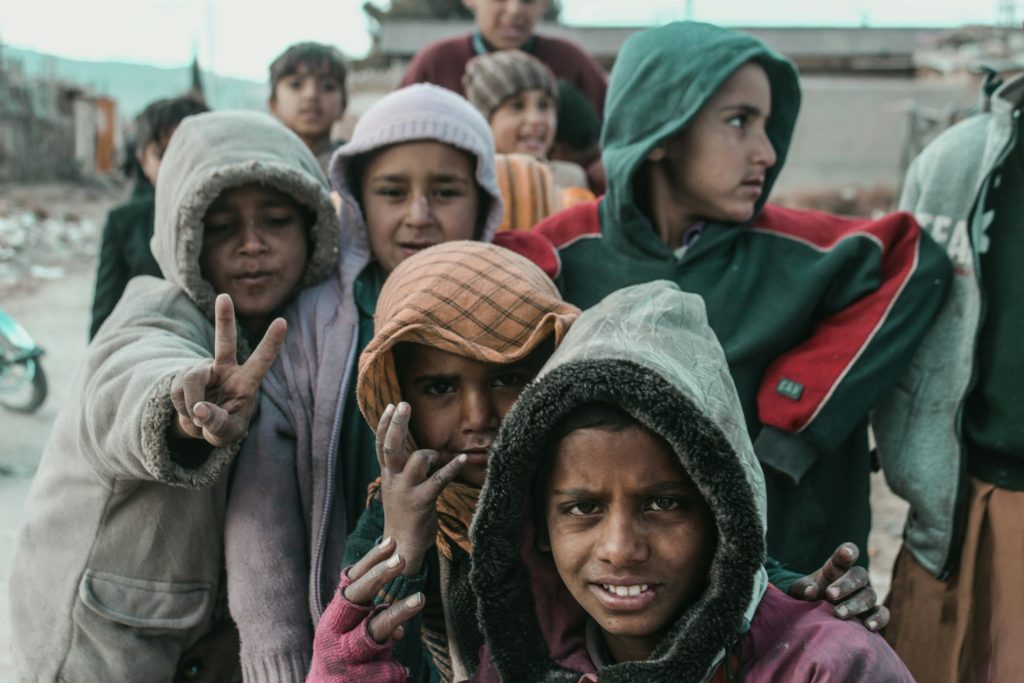
44.7% of Pakistanis lived below the poverty line in 2026.
Read that again. Not a third. Not a quarter. Nearly half. The population living in extreme poverty, meaning they cannot reliably meet basic needs, stands at 16.4%. Pakistan’s Human Development Index score is 0.544, which places it 168th in the world out of 193 countries.
But statistics like these are easy to read and easy to forget. So think of it this way: that 44.7% is your neighbour. It is the woman who runs the corner shop. It is the family one street over who pulled their kids out of school because they could not afford the fees. These are not edge cases. They are nearly every other Pakistani.
The socio-economic problems of Pakistan do not start and end with income. Poor households face a compounding disadvantage: they spend a larger share of what they earn on food, they work in informal jobs that offer no stability, and they rely on public schools and hospitals that are chronically underfunded. When the government cuts subsidies under IMF pressure, this is the group that feels it first and feels it hardest.
So why does poverty persist when the economy keeps growing? Because 3.7% growth barely keeps pace with population growth. The pie gets a little bigger, but there are more people at the table every year. Until Pakistan sustains growth of at least 6–7%, and deliberately channels that growth toward people, not just infrastructure, the poverty numbers will not move much.
3. Unemployment: The Jobs Simply Aren’t There
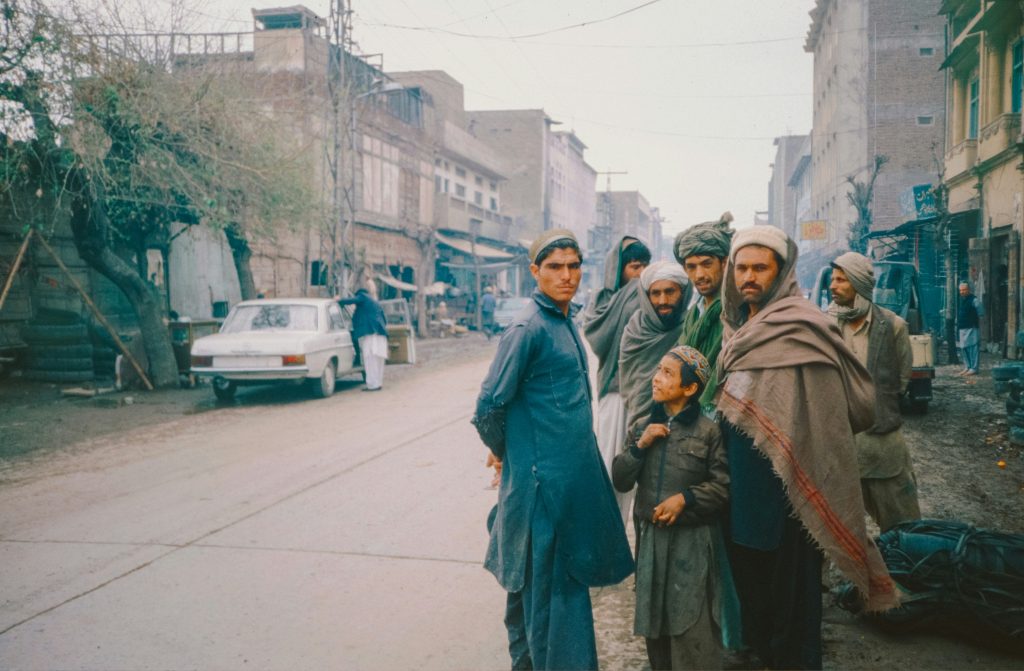
Every year, millions of young Pakistanis finish school or university and enter the job market. Every year, the economy fails to create enough work for them.
Unemployment reached 7.1% in FY 2024–25, the worst figure in 21 years. The IMF expects it to ease slightly, to 6.9% in FY26 and 6.5% the year after. That is modest progress, and even that optimistic projection hides a more uncomfortable truth: millions of people who technically count as “employed” are working in informal, low-wage roles with no contract, no benefits, and no realistic path to something better.
A young man with a degree who drives a rickshaw because nothing else is available shows up in employment data as a success story. He is not one.
Then there is the brain drain. Engineers, doctors, software developers, and accountants educated Pakistanis are leaving in larger numbers than before, heading to the Gulf, Europe, and North America. Pakistan funded their education and then gave them no reason to stay. Every departure is a permanent loss: a person who took years and public resources to develop, gone to make another country more productive.
What this means for you: If you are qualified and still cannot find decent work, the problem is not you. The economy was not built to absorb its own people, and no serious effort has been made to fix that.
4. Taxes: The Salaried Class Pays, Everyone Else Negotiates
Pakistan’s tax-to-GDP ratio is among the lowest in Asia. This did not happen by accident. It happened because powerful industries and wealthy landowners spent decades keeping themselves outside the formal tax system, while the rules were tightened around those who could not escape them, mainly salaried employees.
The Federal Board of Revenue collected Rs 11.735 trillion in FY 2024–25, up 26% from Rs 9.3 trillion the year before. That is genuine progress. It is also still nowhere near what Pakistan needs.
Here is why the system stays broken:
- Agriculture makes up 23% of GDP and contributes almost nothing in income tax
- Real estate deals happen largely off the books
- Retailers and traders resist documentation and frequently get away with it
- Salaried workers have no such option; their tax is deducted before they ever see the money
The IMF has pushed Pakistan to broaden its tax base in the upcoming budget, pulling agriculture, real estate, retail, and the export sector into the net properly. Business groups, meanwhile, are pressing for relief from energy costs and tax complexity, arguing that the current environment is killing investment before it even starts.
What this means for you: If you earn a salary, you are carrying a burden that landlords with thousands of acres and traders with crores in turnover largely avoid. That imbalance does not just feel unfair; it starves public services and pushes the government toward the easiest revenue option it has left: hiking utility bills for everyone.
5. Energy: You’re Paying for Power Plants That Aren’t Running
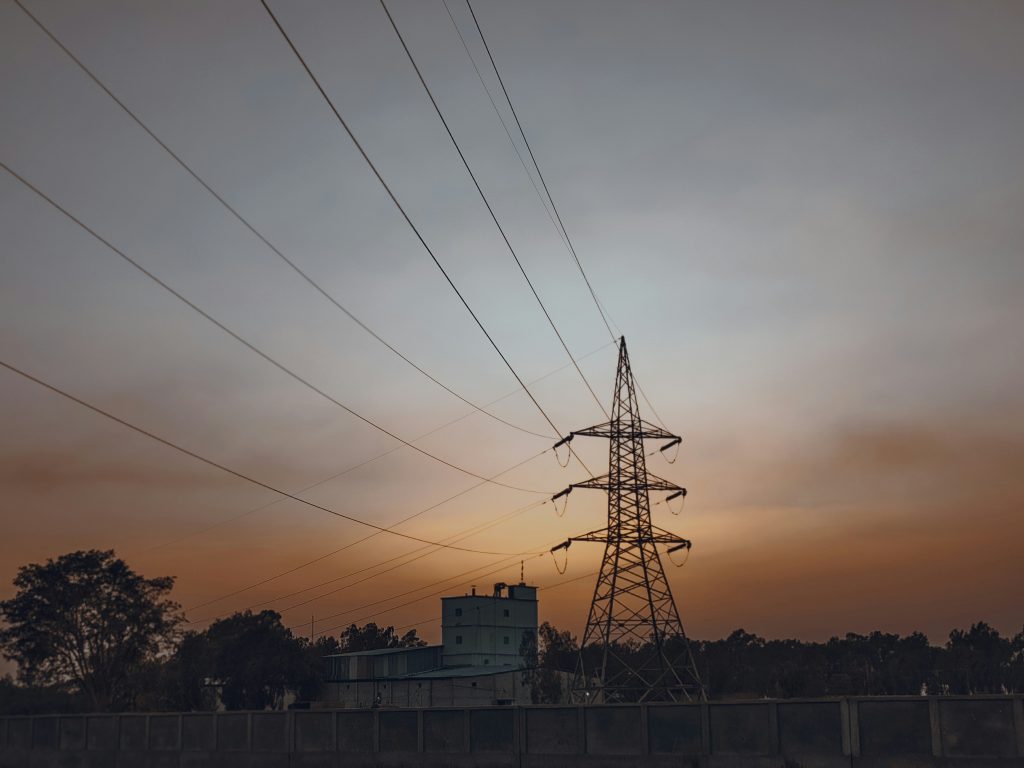
The electricity sector in Pakistan is where fiscal failure, industrial decline, and household poverty all end up on the same bill.
The sector suffers from what is called circular debt, a chain reaction of non-payment. Distribution companies, known as DISCOs, cannot collect enough from consumers. Without that revenue, they cannot pay power producers. Power producers cannot pay fuel suppliers. Fuel suppliers reduce supply. Loadshedding begins. The cycle restarts. Circular debt in the power sector has now crossed Rs 2 trillion.
On top of this, Pakistan signed take-or-pay contracts with power plants years ago agreements that require the government to pay whether the electricity is consumed or not. The country now pays billions annually for power it does not use. Those payments show up on your bill as the Fuel Price Adjustment (FPA) and Capacity Purchase Price (CPP) charges.
Now here is the part nobody talks about enough: as tariffs rise, middle-class households install solar panels and disconnect from the grid. That sounds like a good thing. It is not straightforward. When paying customers leave the system, DISCOs have to recover the same fixed costs from a smaller group. So tariffs go up again. More people install solar. The ones left behind — those who cannot afford panels carry a growing share of the system’s total costs.
The people least able to pay end up paying the most, proportionally. That is not a side effect; that is what the current structure guarantees.
What this means for you: Your monthly electricity bill is not just the cost of the units you consumed. It includes payment for idle power plants, compensation for grid losses, and the full pass-through of global fuel price swings. Fixing this requires restructuring how power plants are contracted and how DISCOs operate, not another quarterly tariff notification.
6. The IMF Cycle: Stabilised, But Going Nowhere
Pakistan has gone to the IMF 24 times. The arrangement is always familiar: cut subsidies, raise utility prices, increase taxes, reduce the deficit, receive the funds, and come back in a few years when the same pressures build again.
After a balance-of-payments crisis that pushed Pakistan close to default, the country secured a $7 billion IMF bailout in September 2024. Conditions did improve: inflation dropped to 4.1% by December 2024, and another $1.2 billion was disbursed in late 2025. The crisis was managed. Managed is not the same as resolved.
Under the current programme, the economy grows at roughly 3–3.5%, just enough to stay ahead of population growth, not enough to meaningfully raise living standards or absorb the youth entering the workforce. Economists describe this as “low-growth equilibrium.” A more honest name might be managed stagnation: the creditors are satisfied, the default is avoided, and the people are more or less where they started.
What this means for you: The tariff hikes and subsidy cuts that come with each IMF deal are fiscal decisions made to reassure international lenders. Economic stability shows up in bond yields before it shows up in grocery prices. If you are waiting to feel the recovery, you are likely going to wait a while longer.
7. Exports and Investment: The Engine Is Stalled
Investment in Pakistan has fallen to a 50-year low. A country that stops investing in its own productive capacity is spending down its future.
In FY2025, Pakistan exported $40.79 billion worth of goods. Textiles accounted for $16.3 billion of that. Food came second at $7 billion. The product categories have not changed much in decades.
Bangladesh is the comparison that stings, started from roughly the same place as Pakistan in terms of garment exports. It diversified, automated, and moved up the value chain. Pakistan is still largely selling cotton yarn and basic garments into a market where it competes on price against countries that often undercut it.
The trade gap is wide and structural: $78.02 billion in imports against $40.79 billion in exports, a deficit approaching $37 billion. Bridging that gap requires foreign borrowing. That borrowing adds to the debt. The debt drives the tariff hikes. The tariff hikes raise industrial costs. Higher costs make exports less competitive. The deficit grows, and the borrowing increases round and round.
What this means for you: Pakistan cannot stabilise its rupee, reduce its debt, or create enough industrial jobs without fixing its export capacity. This is not a business issue. It is the engine of the entire economy, and right now it is stalled.
8. Education and Health: The Costs of Decades of Neglect
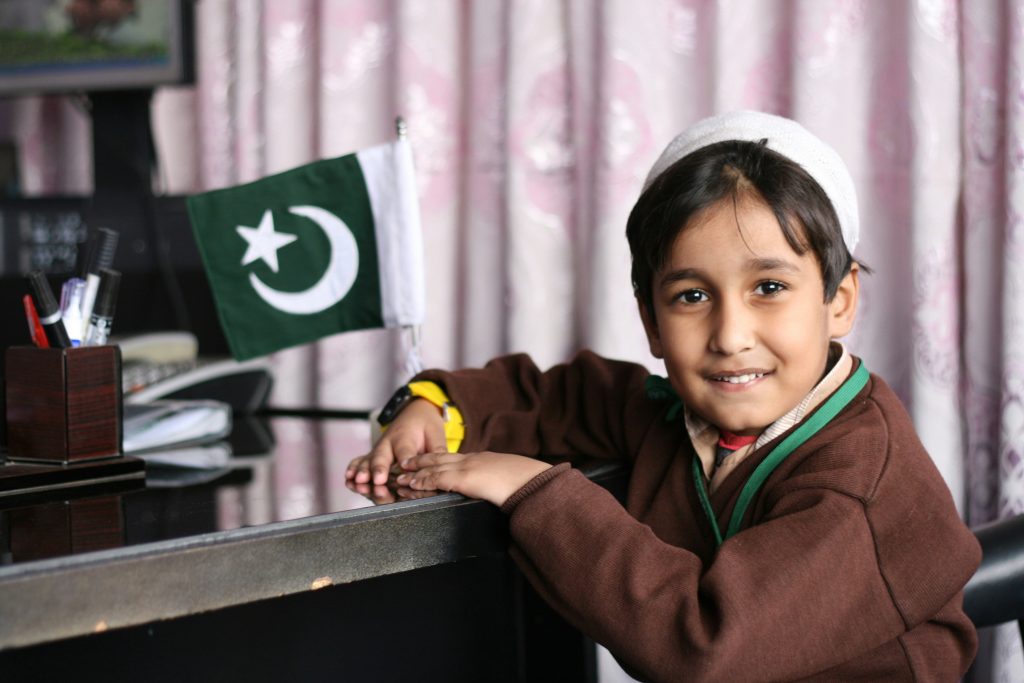
Pakistan’s underinvestment in its own people is not a soft concern or a development talking point. It is the reason the economy cannot grow fast enough to fix anything else.
Literacy sits somewhere between 60-63 percent. Millions of children are not in school, concentrated in rural Punjab, interior Sindh, and urban slums where the nearest functioning school may be kilometres away or simply not worth attending. Public school quality has fallen so far behind private education that where a child is born now largely determines what they can become. A child who cannot read properly at ten years old will not become the programmer or engineer Pakistan needs at twenty-five. The economy loses that person long before they ever have a chance to contribute.
Healthcare is the same story. Public facilities are underfunded and understaffed. Malnutrition affects nearly 40% of children under five, limiting their cognitive development in ways that compound for a lifetime. When a family faces a serious illness in a country without functional public healthcare, the medical bill does not just hurt; it often wipes out savings, forces asset sales, and pushes people below the poverty line permanently.
A workforce that is undereducated and in poor health cannot drive the productivity growth Pakistan needs. This is not a welfare argument. It is an economic one. Human capital is infrastructure, and Pakistan’s has been neglected the same way a road is neglected slowly, then suddenly all at once.
What this means for you: The child who drops out of school because of poverty and the family bankrupted by a hospital bill both represent lost economic output that this country will never recover. Investment in people is not charity. It is the only long-term fix that addresses every other problem simultaneously.
9. Political Instability: The Cost That Never Appears in the Budget
Political instability does not have a line in the federal budget. It has a cost nonetheless.
Since 2021, Pakistan has seen a prime minister removed via a no-confidence vote, a caretaker government, disputed elections, and a political environment that has remained unsettled ever since. Every episode of turbulence has a price: policy decisions get delayed, capital leaves the country, institutions weaken, and the rupee loses ground. Foreign investors watching from the outside do not wait for stability to materialise. They decide Pakistan is not worth the risk and move their capital elsewhere.
The deeper problem is not just that bad policies get implemented during unstable periods. It is that good policies do not survive long enough to show results. Meaningful economic reform takes years. Pakistan rarely provides governments the time to see them through. A reform that could transform the tax system or restructure the energy sector does not get five years. It gets one budget cycle before the next political crisis interrupts it.
What this means for you: Every business that cannot get a reliable policy environment raises its prices to account for the uncertainty. Every foreign investor who leaves is a factory, a tech hub, or a supply chain that never arrived. Political instability is a silent, compounding cost paid by everyone who stays.
10. Global Shocks: Pakistan Absorbs Them All, With Nothing to Cushion the Blow
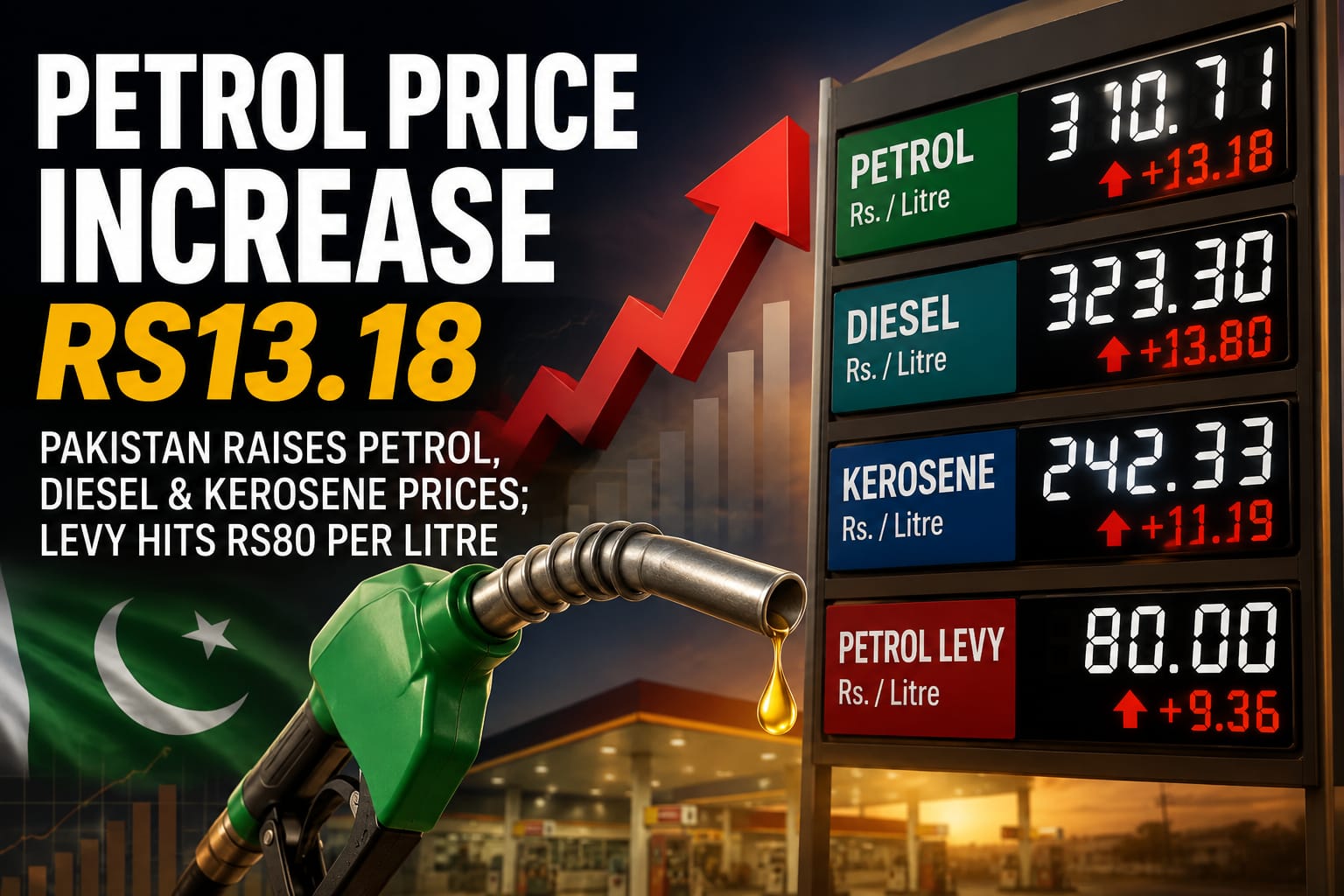
Pakistan imports more than 30% of its energy. That means when oil prices rise as they did when the Middle East conflict intensified in early 2026, Pakistan absorbs the full impact. There are almost no strategic reserves, no hedging mechanisms, no cushion between the international price and your electricity bill.
The IMF projects inflation climbing to 7.2% in FY2026 and 8.4% in FY2027, driven by oil prices and disrupted trade routes. Every rupee of that increase arrives through the Fuel Price Adjustment charge, a mechanism explicitly designed to pass international price volatility onto consumers without delay or limit.
Pakistan cannot determine what happens in the Middle East or how OPEC sets its production targets. But it could reduce how much those decisions matter. More renewable energy, strategic fuel reserves, and export diversification into industries less dependent on imported commodities would all help. Instead, Pakistan remains as exposed as it was during the last crisis, absorbing this one the same way it absorbed that one.
Problems and Solutions: How They Connect
These are not isolated problems with separate solutions. They form a chain.
Debt drives tariff hikes. Tariff hikes raise production costs. Higher costs weaken exports. Weak exports widen the trade deficit. The trade deficit demands more borrowing. Borrowing adds to the debt. Any solution that addresses only one link without the others will not hold.
| Problem | Short-Term Action | Long-Term Solution |
|---|---|---|
| Debt burden | Primary surplus, rescheduling negotiations | Grow exports, reduce structural borrowing |
| Narrow tax base | Enforce existing laws on undocumented sectors | Tax agriculture, real estate, and the informal economy |
| High energy tariffs | Renegotiate capacity payment contracts | Expand renewables, restructure DISCOs |
| Unemployment | Support SMEs, reduce registration barriers | Technical education, industrial job creation |
| Poverty | Expand and properly target BISP | Structural employment through industrial policy |
| Weak exports | Competitive exchange rate policy | Value-added manufacturing and services |
| Political instability | Cross-party economic consensus | Institutional and governance reform |
Final Thoughts
Pakistan has outlasted crises that looked unsurvivable. That is worth acknowledging. It has not yet figured out how to build something that does not require surviving another one.
The macro picture in 2026 has genuinely improved from its worst point. Inflation peaked at nearly 38% in 2023; it has since come down. Foreign reserves, once dangerously low at $3 billion, have been rebuilt. The country did not default, despite coming close enough to make it a serious conversation. Those are real wins.
But they have not changed daily life for the 44.7% of Pakistanis below the poverty line. They have not created jobs for the graduates driving rickshaws. They have not brought the electricity bill down or kept the doctor next to the hospital. The macro stabilisation happened in Islamabad and Washington. The consequences of the underlying problems are still playing out in every Pakistani household.
The socio-economic problems of Pakistan will not dissolve on their own. Fixing them requires a tax system that does not let landlords and traders off the hook while extracting everything from salaried workers. It requires energy reform that goes after the structural causes: idle capacity payments, DISCO inefficiency, circular debt rather than passing the bill downward every quarter. It requires treating education and health as economic infrastructure, not optional spending to cut when the budget gets tight. And it requires enough political stability for reforms to actually take root rather than getting abandoned with each new government.
The article was written by Saira Imran, who covers Pakistan’s economy, energy sector, and public policy for everyday readers. The Ajjkibaat team reviewed it and reports on the issues that show up in your electricity bill, your grocery run, and your job search, translating numbers and policy decisions. Last Updated: June 2026
FAQs
Pakistan’s core economic problems include high public debt, a dangerously narrow tax base, chronic fiscal deficits, energy sector circular debt, collapsed investment levels, high unemployment, and widespread poverty.
The social and economic problems are poverty, unemployment, low literacy, inadequate public healthcare, food insecurity, and income inequality.
The major economic problems of Pakistan are interconnected: debt forces tariff hikes, tariff hikes suppress industry, weak industry reduces exports, weak exports widen the deficit, and the deficit demands more borrowing. Meaningful solutions require taxing agriculture and real estate properly, renegotiating capacity contracts to bring electricity costs down, diversifying exports beyond basic textiles, and making sustained investment in education and technical skills a budget priority rather than a talking point.
High electricity tariffs raise the cost of industrial production, making it harder for Pakistani manufacturers to compete in export markets. Capacity payments drain billions from public finances for power never consumed. Circular debt has crossed Rs 2 trillion and keeps growing. All of it ends up on consumer bills through fuel price adjustments and quarterly revisions, and it hits low-income households the hardest because they have no way to install solar panels and exit the system the way wealthier families can.