Saira Imran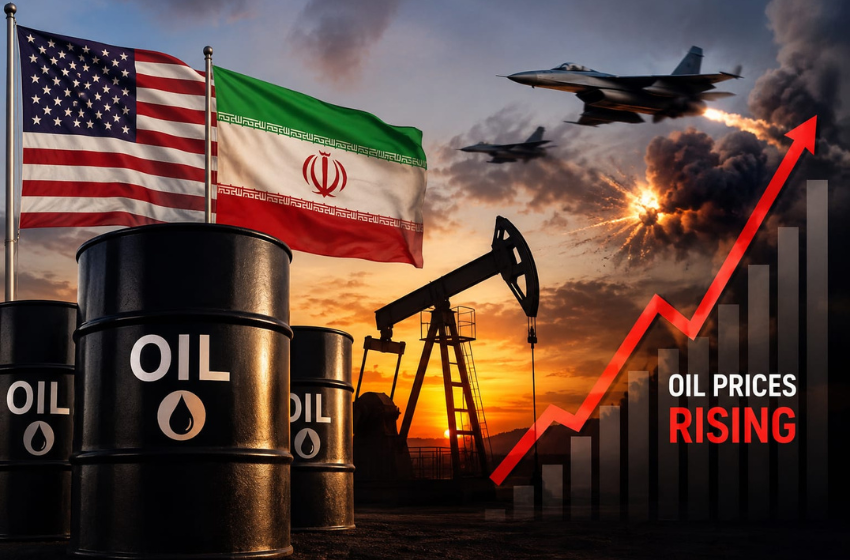
US Strikes on Iran Push Global Crude Oil Prices Higher Again
Global crude oil prices push higher again after the United States carried out fresh military strikes on Iran, increasing concerns about energy supplies and regional stability. The latest developments also included new restrictions on Iran’s crude oil sales, prompting investors to return to the oil market and pushing prices higher.
Brent crude and West Texas Intermediate (WTI), the two main global oil benchmarks, both recorded gains of nearly 2% as traders reacted to the renewed tensions.
The rise in oil prices reflects growing uncertainty in global energy markets. Investors fear that continued conflict in the Middle East could affect oil production and exports from one of the world’s most important energy-producing regions.
According to market reports, the United States launched new airstrikes targeting Iran while also imposing additional sanctions on Tehran’s crude oil exports. These measures increased concerns among investors about possible disruptions to global oil supplies.
What Is the Effect of Higher Crude Oil Prices?
As a result, buying activity increased across international oil markets, driving prices upward.
Brent crude futures climbed by $1.38, reaching $75.54 per barrel, an increase of around 1.9%. At the same time, US benchmark West Texas Intermediate (WTI) crude gained $1.37, bringing its price to $71.81 per barrel, also up by approximately 1.9%.
The latest increase highlights how quickly geopolitical events can influence global commodity markets. Even when actual oil production remains unchanged, uncertainty alone often leads investors to purchase oil futures in anticipation of possible supply shortages.
The Middle East remains one of the most important regions for global oil production. Any military escalation involving major producers or countries located near key shipping routes can trigger immediate reactions in financial and energy markets.
Analysts say traders closely monitor developments between the United States and Iran because any prolonged conflict could affect regional oil exports or transportation through strategic waterways. These risks often encourage investors to move toward safer positions, leading to higher oil prices.
Current Market Reaction
Global crude oil prices push higher again after the US strikes on Iran. The current market reaction marks another shift in sentiment after oil prices had previously eased following a ceasefire between the United States and Iran last month. At that time, crude prices had fallen back to levels seen before the conflict.
Following the ceasefire, many investors and hedge funds expected oil prices to continue declining. They opened large numbers of short positions in oil futures contracts, betting that prices would move lower over time.
However, the latest military action and new sanctions have changed those expectations. The renewed tensions have forced many traders to reconsider their positions, contributing to stronger buying pressure in oil futures.
Energy experts note that sanctions on Iranian crude exports also add uncertainty to global supply forecasts. Iran remains an important oil producer, and any restrictions on its ability to sell crude can tighten market expectations, particularly if demand remains steady.
Although oil prices have increased, market participants will continue watching political and military developments in the coming days. Any further escalation between the United States and Iran could keep prices volatile, while signs of diplomacy or reduced tensions may help stabilize the market again.
Higher crude oil prices can eventually affect consumers worldwide by increasing transportation and fuel costs. Countries that rely heavily on imported oil may also experience higher energy expenses if the upward trend continues.
For now, global energy markets remain sensitive to developments in the Middle East. Investors are expected to closely follow future announcements related to military actions, sanctions, and diplomatic efforts, as each new update could influence the direction of oil prices in the days ahead.