Saira Imran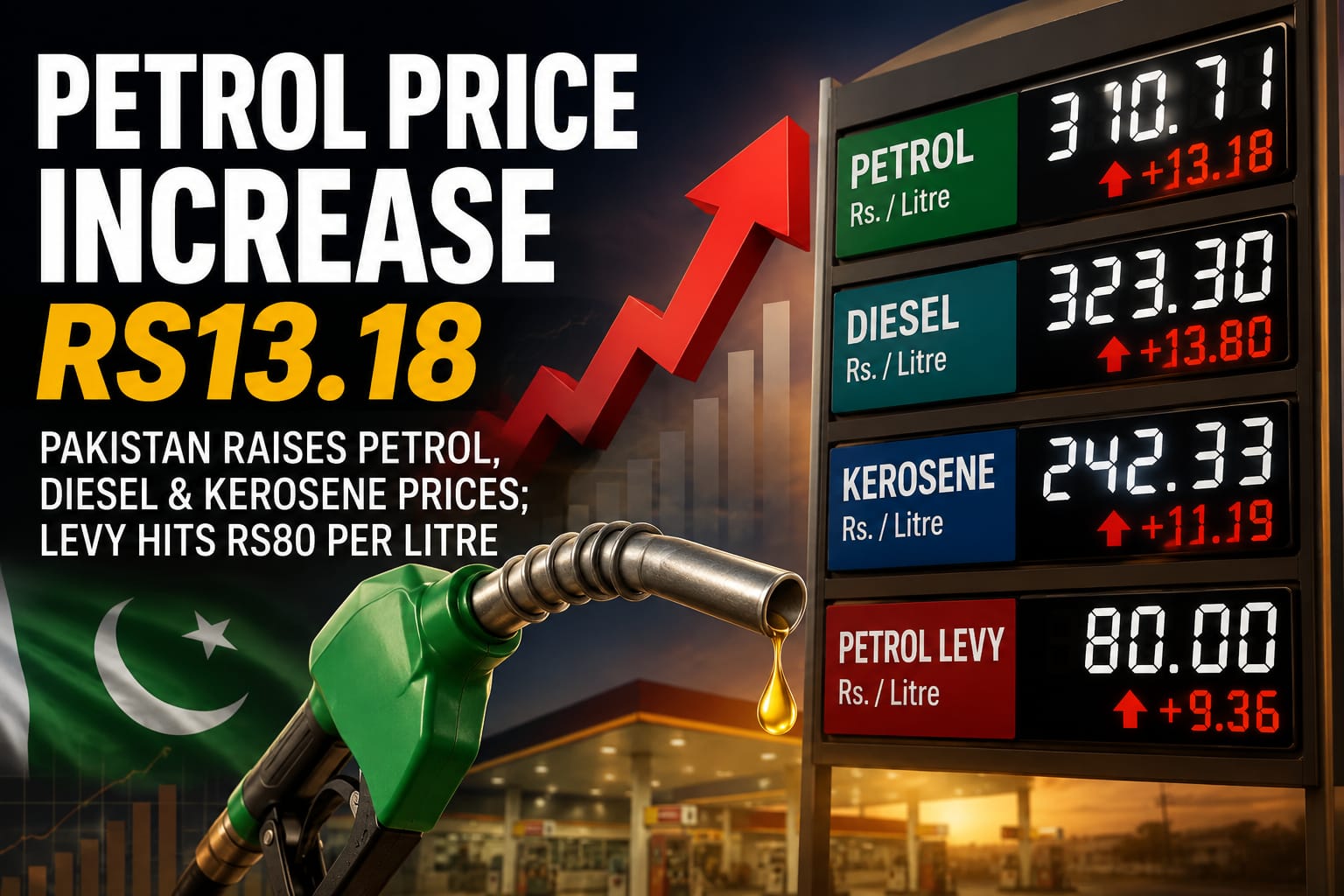
Petrol Price Increase RS13.18: Pakistan Raises Fuel Prices
The petrol price increase of RS13.18 has officially come into effect across Pakistan after the federal government announced a major increase in petroleum product prices. The revised prices came into effect on July 11, following an official notification issued by the Ministry of Energy.
According to the ministry, the government increased the price of petrol by Rs13.18 per litre. The government also raised the price of high-speed diesel by Rs13.80 per litre. The new diesel price now stands at Rs323.30 per litre, compared with the previous rate of Rs309.50 per litre.
Officials said the revised prices became effective at midnight after the official notification was issued.
Kerosene Price Also Goes Up
Along with petrol and diesel, the government also increased the price of kerosene oil.
The price of kerosene rose by Rs11.19 per litre, bringing the new rate to Rs242.33 per litre. Previously, consumers were paying Rs231.14 per litre for kerosene.
Kerosene remains an important fuel for many households, especially in remote areas where natural gas is not widely available. The latest increase is expected to add to the financial pressure on families that depend on it for cooking and heating.
Petrol Levy Increased to Rs80 Per Litre
In addition to higher fuel prices, the government also raised the petroleum levy on petrol by Rs9.36 per litre.
With this increase, the levy on petrol has reached Rs80 per litre, up from the previous Rs70.36 per litre.
Government sources said the higher levy will contribute to overall fuel costs paid by consumers. Since the petroleum levy forms part of the retail price, any increase directly affects the amount motorists pay at fuel stations.
Meanwhile, the levy on high-speed diesel remains unchanged at Rs70.82 per litre.
The increase in the levy, combined with higher fuel prices, is expected to place additional pressure on transport costs and household budgets. Economists believe higher fuel costs often lead to increased prices of goods and services because transportation expenses rise across supply chains.
Public Concern Over Rising Costs
The petrol price increase of Rs13.18 is expected to affect millions of motorists, businesses, and transport operators across the country. Higher fuel prices usually increase transportation costs, which can eventually lead to higher prices for food, consumer goods, and other essential services. Many consumers are concerned that the latest increase will add further pressure to already stretched household budgets.
The latest revision comes at a time when many Pakistanis are already dealing with higher living expenses. Fuel prices play a key role in the country’s economy because they affect transportation, agriculture, manufacturing, and the prices of everyday goods.
Higher diesel prices are particularly important for the transport sector, as trucks, buses, and heavy machinery rely heavily on diesel fuel. As transport costs increase, businesses may pass those additional expenses on to consumers.
Similarly, motorists using petrol for daily commuting will now have to pay significantly more at fuel stations.
Fuel Price Hike Challenged in Lahore High Court
The government’s decision has already reached the courts. A petition has been filed in the Lahore High Court challenging the recent increase in petroleum prices. The application was submitted by the Judicial Activism Panel, which argued that the government raised fuel prices without proper justification.
According to the petition, international oil prices have declined, making the increase difficult to justify. The petitioner also claimed that the federal government lacks a clear and transparent mechanism for determining petroleum prices.
The petition requested the court to declare the latest fuel price increase unlawful and set it aside. The case is expected to be heard after the court fixes a date for proceedings.
What the New Fuel Prices Mean
After the latest revision, fuel prices in Pakistan are as follows:
- Petrol: Rs310.71 per litre (up by Rs13.18)
- High-Speed Diesel: Rs323.30 per litre (up by Rs13.80)
- Kerosene Oil: Rs242.33 per litre (up by Rs11.19)
The petrol levy now stands at Rs80 per litre, while the levy on high-speed diesel remains Rs70.82 per litre.
These changes will likely increase transportation expenses and may contribute to higher prices for essential goods in the coming weeks. Consumers and businesses will be watching closely to see whether future global oil market trends influence the government’s next fuel price review.