Saira Imran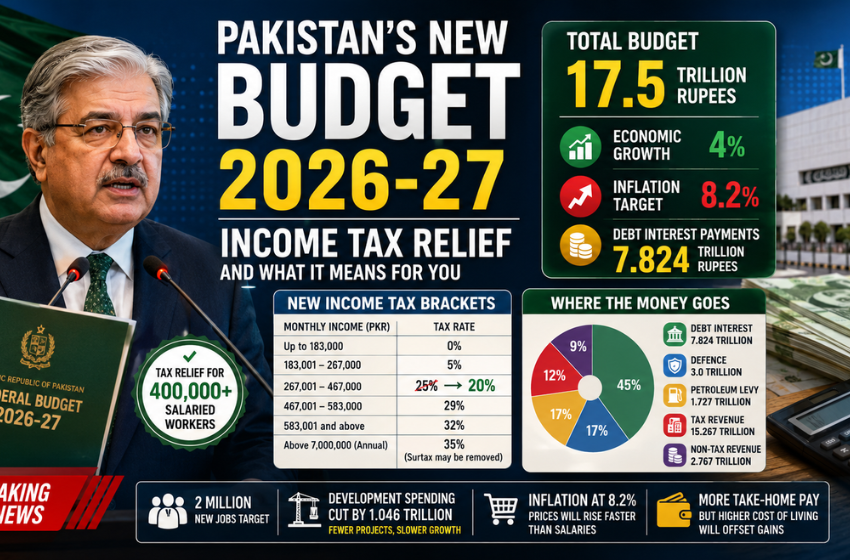
Pakistan Budget 2026-27: Income Tax Relief and Impact
The Pakistan government just announced a 17.5 trillion rupee budget for 2026-27. Here’s what matters to you: the income tax changes will affect your paycheck, and the spending cuts will affect your city.
The headline is simple. Salaried workers earning between 183,000 and 467,000 rupees monthly could pay significantly less tax. The government added two new tax brackets and is considering a 5% cut for the middle band.
Your take-home pay could increase. But prices will rise faster. The government cut development spending by over 1 trillion rupees. And most of the budget goes to paying old debts, not building new things.
What Changed in the Budget?
Instead of six income tax brackets, there are now eight. This matters because it means your income might fall into a lower tax bracket.
The government expects 4% economic growth. It’s rising inflation. That means costs will rise nearly twice as fast as the economy grows. Defence gets 3 trillion rupees. No new roads or schools will be built except in defence and interior affairs.
The salaried class gets the main relief. Anyone earning over 183,000 rupees per month will see some tax reduction. If you earn between 267,000 and 467,000 rupees monthly, your tax could drop from 25% to 20%. That’s meaningful money back in your account.
Why This Matters for Your Wallet?
Your salary relief is real but limited. Inflation will eat much of it.
- First, the salary relief. If you earn between 183,000 and 467,000 rupees monthly, less tax is taken from your paycheck. That’s good. It’s not much, but it’s something.
- Second, prices are rising. The government admits inflation will increase. That’s bread, milk, petrol, electricity, and rent all getting more expensive. Your tax break gets partially offset by higher grocery bills and higher utility costs.
- Third, the government is cutting development projects. Over 1 trillion rupees less is going to new roads, schools, and hospitals. Punjab loses 701 billion rupees. Sindh loses 110 billion rupees. KPK loses 109 billion rupees. Your city will see fewer new projects, fewer construction jobs, and slower infrastructure growth.
How the New Tax System Works?
The new tax brackets are designed to cut rates for the middle class.
If you earn between 183,000 and 267,000 rupees monthly, you get a tax cut. This is the entry point for relief.
The 267,000 to 467,000 rupee bracket gets the biggest break. Your tax drops from 25% to 20%. About 400,000 salaried workers will benefit from this change. This is real money. If you earn 350,000 rupees, a 5% tax cut equals 17,500 rupees per month back in your pocket.
The 467,000 to 583,000 rupee bracket goes to 29%. This is a new bracket that didn’t exist before.
Higher earners between 583,000 rupees and above pay 32%. At the top, the rate stays at 35%.
People earning over 7 million rupees annually might get a surprise. The government is considering removing the surcharge on top earners. This would save very high-income individuals significant money.
Where Does the Money Come From and Go?
The 17.5 trillion rupee budget breaks down into clear pieces.
Tax revenue is supposed to be 15.267 trillion rupees. This comes from income tax, sales tax, customs duty, and other levies. The government always expects to collect more than it actually gets.
Non-tax revenue is another 2.767 trillion rupees. This comes from government fees, asset sales, and privatization proceeds. Pakistan has been selling off state-owned companies to raise cash.
Debt interest payments take 7.824 trillion rupees. Think about that. Nearly half the budget goes to paying interest on old loans. This is money that doesn’t build anything. It just services Pakistan’s accumulated debt to banks and foreign lenders.
Defence gets around 3 trillion rupees. This covers salaries, equipment, and operations for the military.
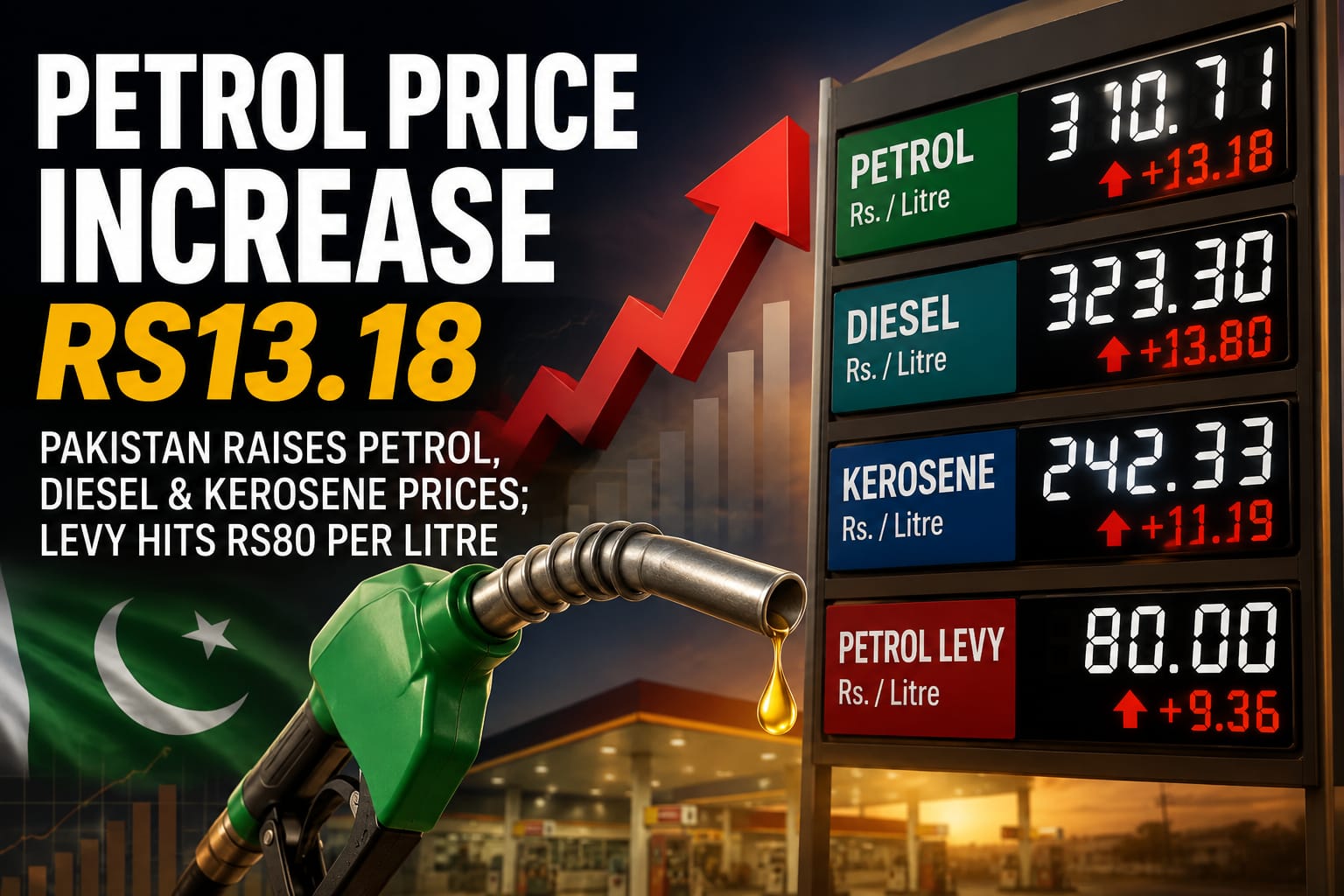
Petroleum levy brings in 1.727 trillion rupees. This is the tax on petrol and diesel. It’s why fuel prices are so high and why they stay high.
The Employment Promise: 2 Million Jobs
The government announced plans for 2 million new jobs. This sounds impressive until you look at what kinds of jobs.
The services sector (shops, banks, hospitals, IT) will supposedly add 1.1 million jobs. These are mostly entry-level retail and hospitality positions. Call centre jobs. Fast food work. Decent starting points but not high-wage positions.
Manufacturing will add 500,000 jobs. These are factory and industrial positions. Pakistan’s textile and apparel sectors could grow if global trade cooperates.
Agriculture will add 400,000 jobs. These are mostly seasonal, temporary work on farms.
Here’s the issue. Job creation depends on actual economic growth. If growth falls short, these targets evaporate. The government has missed employment targets before. There’s no guarantee these 2 million jobs actually materialize.
Development Projects: Almost Nothing New
Here’s the controversial part. The government stopped almost all new development projects.
The only new projects allowed are in defence and interior affairs. Everything else is frozen. No new roads, no new schools, no new hospitals, no new water systems.
The cuts total 1.046 trillion rupees from development budgets. This affects every province. Punjab loses 701 billion rupees. Sindh loses 110 billion rupees. KPK loses 109 billion rupees.
What does this mean for you? Your city will see slower infrastructure growth. Construction jobs will dry up. Engineers and contractors will have fewer opportunities. New power plants will be delayed. Water projects will wait. Roads will deteriorate rather than improve.
The government’s reasoning is clear. Pakistan has taken on so much debt that every rupee borrowed costs money in interest. Cutting development spending frees up money for debt repayment. It’s a strategy to stabilize the economy. But the cost is slower physical growth and fewer construction jobs.
The Trade Problem
Pakistan has a serious mismatch between what it sells and what it buys.
The government expects to export 32.8 billion dollars worth of goods. Imports are forecast at 70 billion dollars. That’s a 37 billion dollar trade deficit.
Pakistan must buy far more from other countries than it sells. Someone has to cover this gap. That someone is usually foreign loans and investments. But foreign lenders expect repayment with interest. Pakistan is borrowing just to maintain its current living standard.
Expensive fuel is a big culprit. Pakistan buys oil and gas from abroad. Expensive machinery imports are another. Tractors, generators, and industrial equipment. Expensive food comes in too. Pakistan imports wheat, cooking oil, and spices because domestic production falls short.
The government wants to boost local manufacturing. But it just cut development spending, which makes manufacturing harder to grow. There’s a contradiction between the policy goals and the spending decisions.
Economic Growth and Rising Prices
The government targets 4% economic growth for 2026-27. This is modest. Pakistan’s population grows at about 2% per year. So 4% growth means some improvement if things go well. The economy grows slightly faster than population increases.
But inflation is 8.2%. This cancels out the growth benefit. If the economy grows 4% but prices rise 8.2%, your actual purchasing power falls. A rupee buys less. Your salary can’t keep up with costs.
Agriculture will grow at 3.8%. Large industries will grow at 4.5%. Services will grow at 4.2%. These targets depend on stable electricity supply, good harvests, no political disruption, and stable weather. Pakistan doesn’t always get these conditions. Any disruption derails these targets.
What does this mean in practice? Your salary will not keep up with inflation. The things you buy will cost noticeably more next year. Your tax relief helps, but it’s partially negated by higher prices.
The Real Picture
The Pakistan Budget 2026-27 gives tax relief to the salaried middle class. That’s good news if you earn between 200,000 and 400,000 rupees monthly.
But the bigger story is less hopeful. The government is cutting development spending sharply. Roads won’t be built. Schools won’t expand. Hospitals will stay crowded. The focus is on stabilizing the economy, not growing it.
Most budget money goes to interest payments. About half. That means debt repayment, not progress.
Inflation will eat into your salary relief. And the government is betting on economic growth that might not happen. Job targets might be missed. Manufacturing growth depends on conditions that aren’t guaranteed.
For most Pakistanis, this budget means a small tax break offset by higher prices and slower infrastructure growth. It’s not a thriving economy. It’s an economy in stabilization mode, trying to prevent collapse rather than build something new.
Your practical move? Check your new tax bracket starting in July 2026. Budget for 8.2% higher prices on groceries and utilities. Watch whether those 2 million jobs actually appear. And expect that development projects in your city will move slowly, if at all.