Saira Imran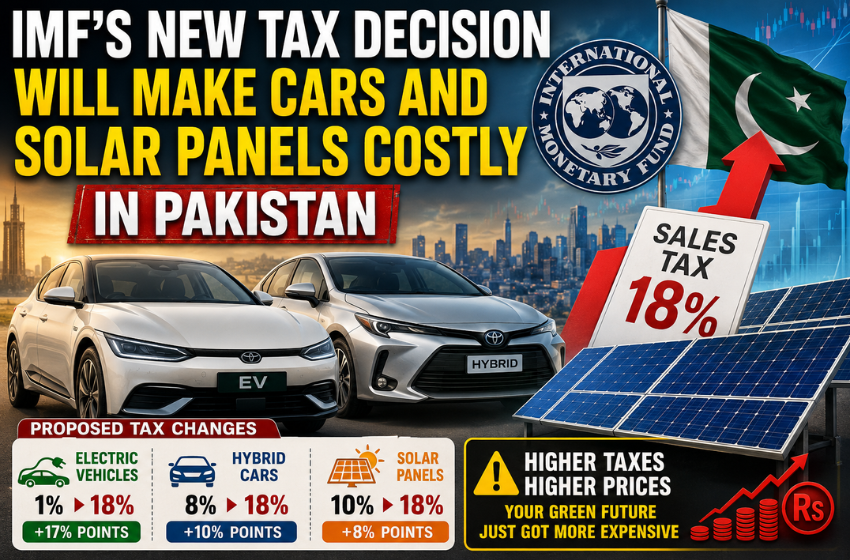
What is IMF Sales Tax on Electric Vehicles & Solar Panels in Pakistan 2026
Your hybrid-car or solar-panel dream just got more expensive. Here is how the IMF Sales Tax on Electric Vehicles and Solar Panels in Pakistan 2026-27 means for you.
The International Monetary Fund has refused to let Pakistan keep tax breaks on hybrid cars, electric vehicles, and solar panels. This means the government is now preparing to add an 18 percent sales tax on all three in the next federal budget.
This decision will directly hit your wallet. If you were planning to buy an EV, a hybrid car, or install solar panels at home, expect to pay significantly more starting from the next financial year.
What Is Happening Right Now?
Pakistan’s government is considering major changes in taxation on alternative energy and electric transport products ahead of Budget 2026-27. The IMF has refused to allow any new tax exemptions and has proposed increasing the General Sales Tax on electric vehicles from 1 percent to 18 percent. Under the same plan, the government could raise GST on hybrid vehicles from 8 percent to 18 percent and increase the tax on solar panels from 10 percent to 18 percent.
Sources from the Ministry of Industries and Production confirmed that officials are actively discussing these changes and preparing them for inclusion in the upcoming federal budget announcement.
Why Is the IMF Doing This?
Pakistan is currently running an IMF loan program. As part of this program, the IMF pushes Pakistan to reduce tax exemptions and increase government revenue. The IMF believes that special tax breaks on EVs and solar panels create an uneven tax system.
During talks with the Ministry of Industries and Production, the IMF insisted that the government remove hybrid vehicles and electric bikes from the Eighth Schedule and place them under the standard tax regime. This move could dramatically alter the local hybrid vehicle market, which has so far thrived under reduced taxes.
In short, the IMF wants a flat, standard tax rate for everyone. That sounds fair on paper. But in practice, it removes the incentives that were helping ordinary Pakistanis switch to cheaper and cleaner energy.
How Much More Will You Pay?
Here is a simple breakdown of the proposed tax changes:
| Vehicles | Current Sales Tax | Proposed Sales Tax | Jump |
| Electric Vehicles (EVs) | 1 Percent | 18 Percent | 17 Percentage Point |
| Hybrid Cars | 8 Percent | 18 Percent | 10 Percentage Point |
| Solar Panels | 10 Percent | 18 Percent | 8 Percentage Point |
Industry experts warn that higher taxes could increase the installation cost of residential solar systems by hundreds of thousands of rupees, especially for middle-income households already struggling with rising electricity tariffs. If the government implements the new GST rate, it could increase the cost of a standard 10kW solar system by Rs 200,000 to Rs 300,000.
What does this mean for Car Buyers?
Pakistan’s car import numbers tell the full story. Sources from the Ministry of Industries and Production reported that Pakistan imported around 45,000 vehicles in the last financial year. They expect imports to fall to around 40,000 vehicles this year. Between July and April alone, importers had already brought roughly 38,000 vehicles into the country.
The government previously extended tax exemptions for hybrid vehicles and electric bikes until June 30, 2026. However, under the new proposal, it plans to remove these exemptions in the next financial year. This change could raise the prices of hybrid vehicles and motorcycles and put additional pressure on consumers and the local automotive industry.
If you are thinking of buying a hybrid or electric car before the budget, now may be the last chance to buy at the current price.
What does this mean for Solar Panel Buyers?
Pakistan has seen a solar revolution in recent years. Millions of households switched to solar power to escape high electricity bills. That trend may now slow down.
The proposed tax changes come at a time when solar adoption has surged across Pakistan due to record-high electricity bills, frequent tariff adjustments, and growing frustration with the national grid system.
Adding 8 more percentage points to solar panel taxes puts clean energy further out of reach for middle-class families. For a country already struggling with power outages and high electricity costs, this is a painful move.
Is There Any Good News?
Despite the proposed tax hikes, the government is simultaneously working on a New Energy Vehicle framework aimed at encouraging the local assembly and manufacturing of green-energy vehicles, including electric and hybrid models. Officials have reportedly resisted some IMF-backed proposals seeking even broader taxation on electric vehicles.
The government has not yet announced the final budget. There is still a small chance that some of these proposals may be softened before the official budget speech. Watch this space closely.
The Bottom Line
Pakistan’s Budget 2026-27 is shaping up to be expensive for anyone who wants to go green. The IMF’s refusal to continue tax breaks on EVs, hybrid cars, and solar panels will push prices higher at a time when people are already struggling.
The government is caught between IMF conditions and public pressure. One thing is clear. If these taxes pass, the cost of clean energy and fuel-efficient transport in Pakistan will jump sharply.
Stay tuned to AjjKiBaat for the latest updates as the budget date approaches.