Saira Imran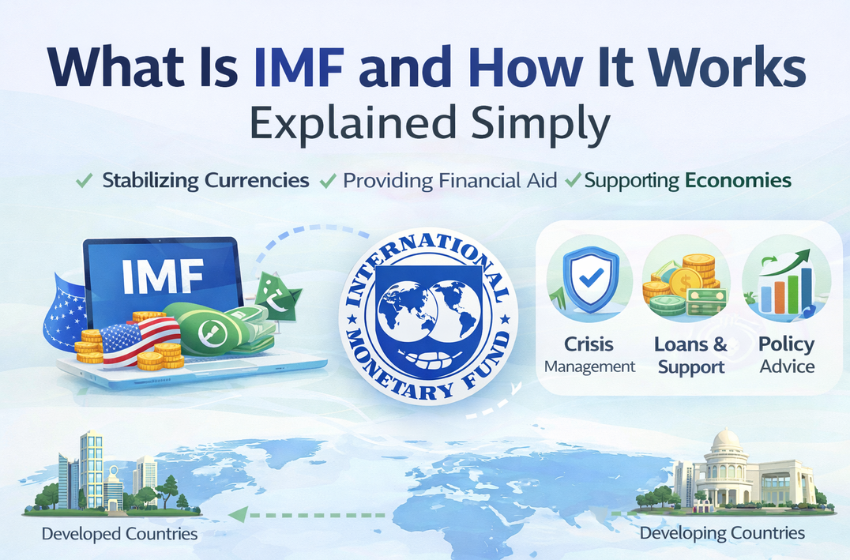
What Is IMF and How It Works Explained Simply
What is IMF and How It Works is an important question for anyone who wants to understand the global economy. The International Monetary Fund supports countries during financial crises. It helps stabilize currencies, restore economic balance, and provide loans when nations face shortages of foreign reserves.
Along with financial aid, it offers policy advice and technical support. These actions help countries improve their economic systems.
The IMF plays a key role in promoting global financial stability. It connects developed and developing countries through cooperation. This makes it one of the most influential financial institutions in the world today. Let’s learn how!
What Is IMF and How It Works?
Here is what the IMF is and how it works in detail:
What is IMF?
The International Monetary Fund (IMF) is a global financial institution that works to maintain stability in the world economy. It supports countries facing financial stress, such as currency collapse, low foreign reserves, or rising debt.
Read Also: What Is Inflation in Simple Words? Easy Guide
The IMF does not operate like a commercial bank. Instead, it works as a cooperative organization. Member countries contribute financial resources. In return, they gain access to emergency funding when needed.
The IMF focuses on three major goals:
Financial Stability: It helps countries keep their currencies stable. It also monitors global financial risks to prevent crises.
Economic Growth: It supports policies that encourage trade, investment, and long-term development.
Crisis Management: It provides emergency financial support to countries facing economic collapse or severe instability.
Today, the IMF includes 190 member countries, which makes it a near-global institution covering almost every economy in the world.
How IMF work?
The IMF operates through a quota-based system. Each member country contributes money to the IMF. The contribution depends on the country’s economic size, GDP, and global influence.
These contributions form a financial pool. The IMF then uses this pool to support countries in need.
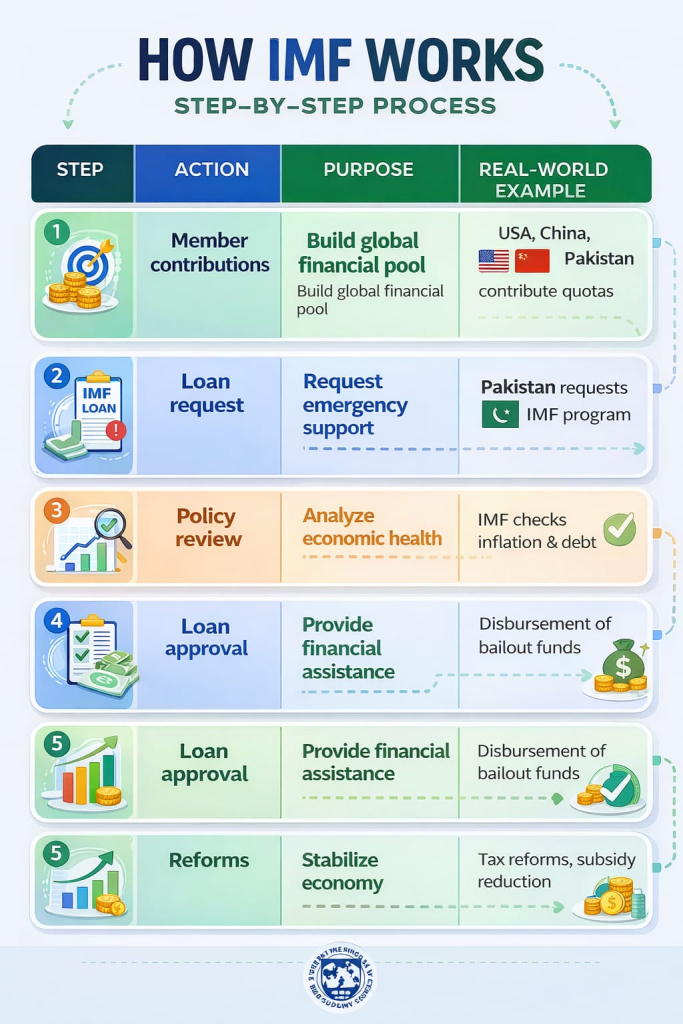
Here is the step-by-step IMF working process:
1. Member Contributions
Each country deposits funds into the IMF pool. Larger economies contribute more, while smaller economies contribute less.
2. Loan Request
A country facing an economic crisis requests financial assistance. This usually happens during low reserves, currency pressure, or a debt crisis.
3. Economic Review
The IMF examines the country’s economy in detail. It checks inflation, trade balance, debt level, and fiscal policies.
4. Loan Approval with Conditions
If approved, the IMF releases funds. However, it sets conditions called structural reforms. These reforms aim to fix the economy.
5. Implementation of Reforms
The country must apply the agreed changes. These often include tax reforms, subsidy cuts, or policy adjustments.
IMF History
The IMF started as a post-war financial stabilizer. Over time, it evolved into a global institution that now manages financial crises, supports developing economies, and monitors global economic risks.
Origin and Establishment
The International monetary fund established in 1944 during the Bretton Woods Conference, which took place in New Hampshire, USA. This conference brought together representatives from 44 Allied nations during World War II.
These countries wanted to rebuild the global financial system. They also wanted to avoid another worldwide economic collapse like the Great Depression of the 1930s.
The IMF officially began operations in 1945 with 29 founding member countries. At that time, its main role focused on stabilizing exchange rates and rebuilding international trade systems after the war.
The early structure of the IMF created a framework where countries agreed to cooperate on monetary policies instead of acting independently, which helped reduce global financial conflicts.
Why the IMF Was Created?
The IMF was created because the global economy faced severe instability after World War II. Many countries struggled with destroyed infrastructure, weak currencies, and collapsing trade systems.
Exchange rates fluctuated heavily, which made international trade risky and unpredictable. Countries often devalued their currencies to gain trade advantages, which created tension between economies.
To solve these problems, the IMF was designed with clear goals:
Prevent Economic Crises
The IMF aimed to reduce the risk of global financial collapse by monitoring economic policies and supporting struggling nations.
Avoid Currency Wars
Countries often compete by devaluing their currencies. The IMF introduced a system to promote stable exchange rates and fair trade practices.
Promote Global Cooperation
The IMF encouraged countries to work together instead of acting independently in financial matters. This cooperation helped build trust in the global financial system.
Over time, these goals expanded, and the IMF became a central institution for global economic stability.
IMF Headquarters
The IMF Headquarters acts as the command center of global economic governance. Decisions made here affect currency stability, international loans, and economic reforms across both developed and developing countries.
Location and Importance
The IMF Headquarters is located in Washington, D.C., United States of America. This location serves as the central administrative and decision-making hub of the International Monetary Fund.
Washington, D.C., was chosen because it is a major global financial center and also the capital of the United States, one of the founding and most influential members of the IMF. This gives the institution strong access to global financial networks, policymakers, and international organizations.
The headquarters acts as the operational brain of the IMF. Almost all major financial decisions, policy frameworks, and global economic assessments are coordinated from this office.
What IMF Headquarters handle?
The IMF Headquarters manages several critical functions that directly influence the global economy:
Global Policy Decisions
Experts and executive board members design and approve policies that guide international monetary cooperation. These policies affect exchange rates, lending rules, and global financial stability.
Meetings with Member Countries
Representatives from all 190 member countries regularly meet at the headquarters. They discuss economic challenges, loan programs, and reform requirements. These meetings help align global financial strategies.
Economic Research and Analysis
The IMF conducts deep economic research at its headquarters. It studies inflation trends, debt levels, trade imbalances, and global risks. This data helps governments make informed economic decisions.
Role of IMF Headquarters in the Global Economy
The headquarters not only manages internal operations. It also plays a central role in shaping global financial stability.
Officials from member countries gather here during major events such as the IMF Annual Meetings. These gatherings allow countries to discuss global economic risks and coordinate responses to financial crises.
The headquarters also publishes key reports such as the World Economic Outlook, which influences global markets and investor decisions.
IMF Functions and Objectives
The IMF functions deal with what the IMF does daily, while the objectives explain why the IMF exists. Together, they form a system that supports global economic stability and prevents financial crises from spreading across countries.
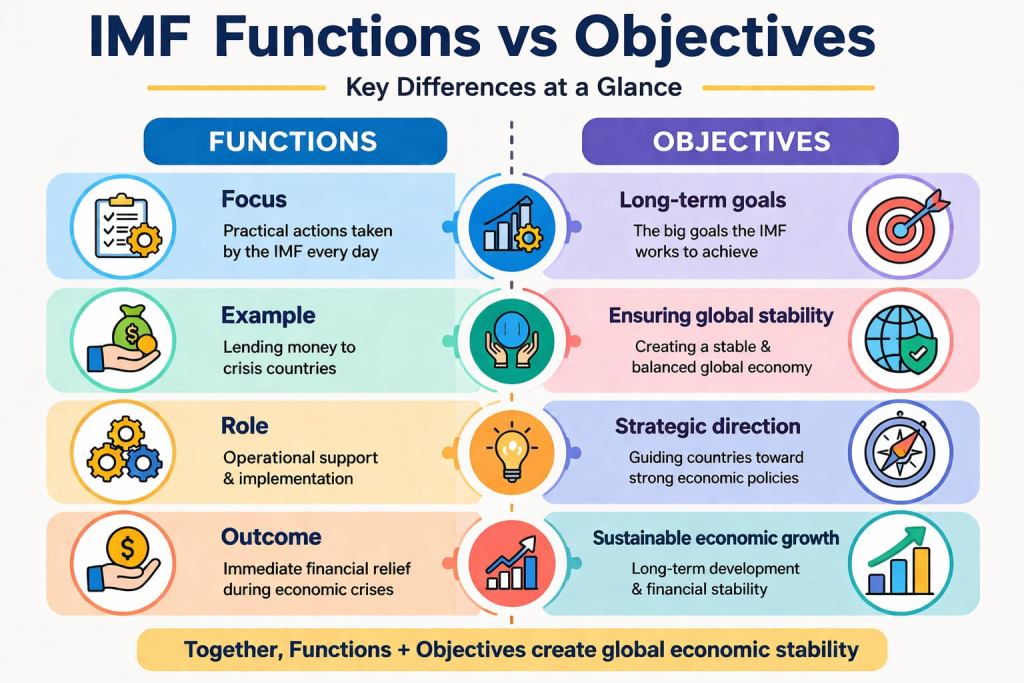
IMF Functions
The IMF functions and objectives focus on maintaining stability in the global financial system. The IMF not only provides money. It also monitors economies, guides governments, and prevents financial collapse across countries.
Its functions work in practice through financial support, supervision, and technical expertise.
Provide Loans to Countries in Crisis
The IMF gives financial assistance to countries facing serious economic problems such as low foreign reserves, debt pressure, or currency devaluation. These loans help governments stabilize their economies and avoid default.
Monitor Global Economies (Surveillance)
The IMF continuously studies the economic performance of member countries. It tracks inflation, GDP growth, fiscal deficits, and trade balances. This process helps identify risks before they turn into global crises.
Offer Policy Advice
The IMF advises governments on how to improve their economic systems. This includes recommendations on taxation, spending, inflation control, and financial reforms. These suggestions aim to improve long-term economic stability.
Provide Technical Support
The IMF also helps countries improve financial management systems. It offers training, data tools, and expert assistance to strengthen institutions like central banks and finance ministries.
Act as a Lender of Last Resort
When countries cannot borrow from other sources, the IMF steps in as a final financial support system. This role helps prevent complete economic collapse in crises.
Objectives of IMF
The Objectives of IMF define its long-term mission in the global economy. These goals guide all IMF activities, including lending, monitoring, and policy advice.
Promote International Monetary Cooperation
The IMF encourages countries to work together on financial policies. This cooperation reduces conflicts and improves global economic stability.
Maintain Exchange Rate Stability
The IMF helps prevent extreme fluctuations in currency values. Stable exchange rates support international trade and investment.
Support International Trade
The IMF promotes smooth trade between countries by reducing financial barriers and ensuring stable economic conditions.
Reduce Poverty
The IMF supports economic programs that help developing countries grow. Stronger economies lead to better job opportunities and reduced poverty levels.
Prevent Financial Crises
The IMF monitors global risks and provides early warnings. It also supports countries with financial aid to prevent economic collapse.
These objectives work together to create a more balanced, predictable, and stable global financial system.
Impact on Pakistan
Pakistan has a long financial relationship with the International Monetary Fund. The country has entered more than 20 IMF programs since joining the institution in 1950. These programs usually start when Pakistan faces pressure on its external accounts, rising fiscal deficits, or falling foreign exchange reserves.
IMF support helps Pakistan stabilize its economy during difficult periods. The loans provide immediate foreign currency inflows, which improve the country’s ability to pay for imports like fuel, machinery, and essential goods.
Read Also: Pakistan Economy Crisis Explained 2026 – Key Reasons
How IMF Loans Help Pakistan?
IMF financial assistance mainly supports three key areas:
Increase Foreign Reserves
IMF funds strengthen Pakistan’s foreign exchange reserves. This helps the country avoid default risks and stabilizes the currency in the short term.
Control Inflation
IMF-backed reforms often target inflation control by reducing fiscal deficits and tightening monetary policy. This helps slow down price increases over time.
Stabilize the Economy
IMF programs aim to restore macroeconomic stability. They improve investor confidence and help Pakistan access additional funding from other international lenders such as the World Bank and friendly countries.
Challenges
Although IMF programs provide financial relief, they also come with strict economic conditions known as structural reforms. These reforms aim to fix long-term weaknesses in the economy, but they often create short-term pressure on the public.
Increasing Taxes: The IMF usually pushes for a broader tax base and higher tax collection. This includes increasing indirect taxes like sales tax, which affects daily goods and services.
Reducing Subsidies: Subsidies on electricity, fuel, and food are often reduced or removed. This increases utility bills and transportation costs for households and businesses.
Controlling Government Spending: The IMF asks governments to reduce budget deficits by cutting unnecessary expenditures. This can slow down public development projects and reduce government support programs.
Short-Term Public Pressure: These reforms often lead to higher prices and reduced purchasing power in the short term. As a result, middle- and lower-income groups feel the strongest impact.
However, the IMF argues that these steps are necessary to build a more stable and self-sustaining economy in the long run.
Final Thoughts
What is IMF and How It Works becomes clear when we understand its role in providing financial support, guiding economic reforms, and maintaining global stability, which makes it a key institution for managing economic crises and supporting long-term growth across the world.
FAQs
Member countries provide funds based on their economic size.
The IMF has 190 member countries.
Yes, Pakistan has received multiple IMF loans.
North Korea, Cuba, Liechtenstein, and Monaco are not IMF members.