Saira Imran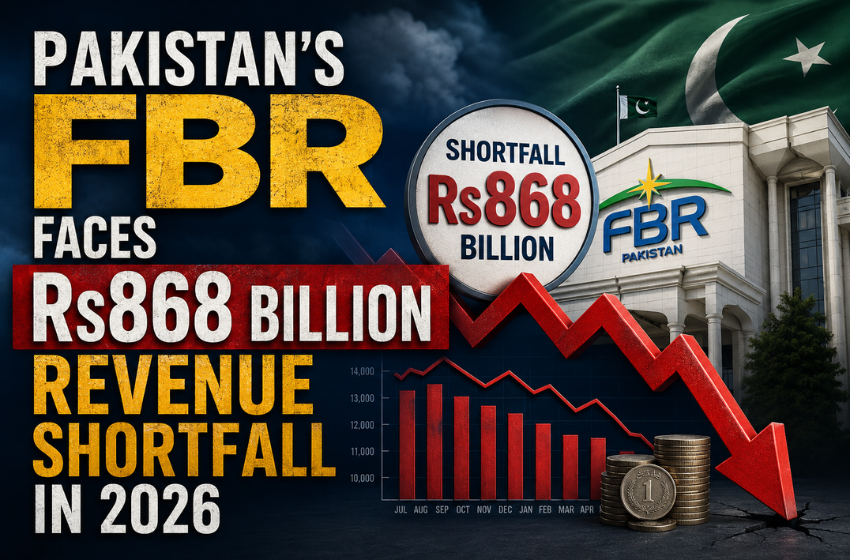
Pakistan’s FBR Faces Rs868 Billion Revenue Shortfall in 2026
Pakistan’s tax authority missed its revenue target by a massive Rs868 billion in just 11 months. Here is why this happened and what it could mean for ordinary Pakistanis.
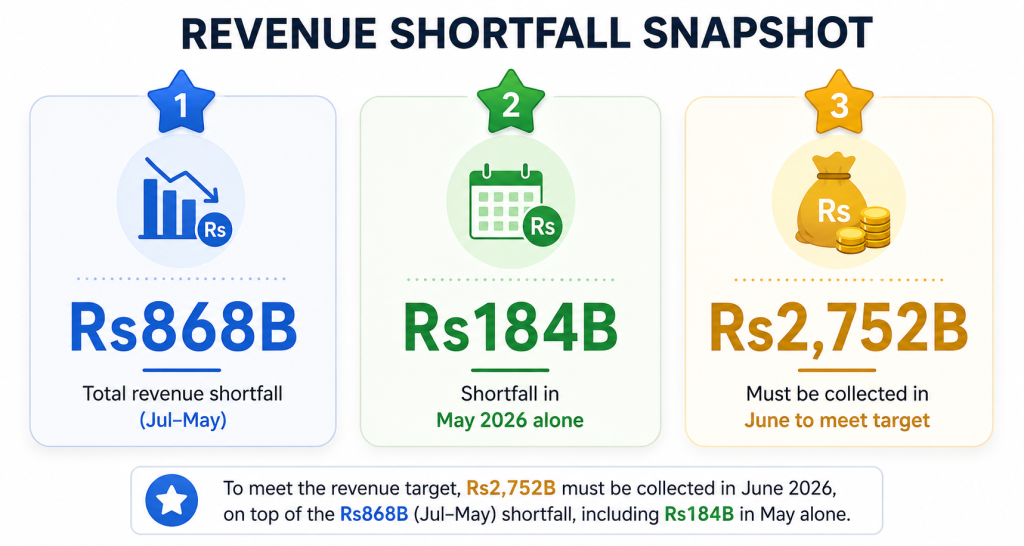
The Federal Board of Revenue (FBR) collected Rs11,227 billion between July 2025 and May 2026. Its revised target was Rs12,095 billion. That leaves a gap of Rs868 billion. This is one of the biggest revenue shortfalls Pakistan has seen in recent years.
Why Did This Happen?
Two main reasons caused this shortfall. First, the Gulf conflict slowed down economic activity across Pakistan. Trade, imports, and business transactions all fell. When businesses slow down, tax collection drops too.
Second, the long Eid holidays this year reduced the number of working days for FBR. Tax offices were closed. Businesses deferred payments. This pushed the May shortfall to Rs184 billion on its own.
In May 2026, FBR collected only Rs966 billion. The target was Rs1,150 billion. That is a gap of Rs184 billion in a single month.
FBR must collect Rs2,752 billion in June 2026 alone to meet its revised annual target of Rs13,979 billion. That is nearly three times what it collected in May.
Why This Matters to You
When the government falls short on tax collection, it has limited choices. It can borrow more money, and it can cut spending on services. Or it can raise taxes and duties in the next budget. All three options affect everyday Pakistanis.
Higher borrowing means more debt. More debt means more pressure on the rupee. A weaker rupee makes imports more expensive. That includes petrol, medicines, and everyday goods.
Cutting spending means less money for roads, hospitals, schools, and subsidies. Higher taxes in the next budget mean a greater burden on salaries and consumer goods.
The IMF Factor
Pakistan’s annual revenue target was originally set at Rs14,130 billion by parliament. The IMF later revised it down to Rs13,979 billion. Even with this lower target, FBR is still falling far short.
FBR is now heading toward a total annual shortfall of close to Rs1 trillion. That is a serious concern for Pakistan’s IMF programme. Missing revenue targets can trigger tough conditions in future loan reviews.
Is There Any Hope for June?
FBR officials say they are hopeful. Some pending collections may still come in before the fiscal year ends on June 30. Officials believe final figures could be higher than early estimates.
If FBR manages to collect Rs13,000 billion by year’s end, officials say that will still be considered a success. That target is lower than the revised goal but more realistic given current conditions.
Senior FBR officials expect total collections to reach close to Rs13 trillion by the end of June. That would still leave a shortfall of nearly Rs1 trillion from the IMF revised target.
FAQs
FBR stands for Federal Board of Revenue. It is Pakistan’s main tax collection body. It collects income tax, sales tax, customs duties, and other revenues that fund the government budget.
A revenue shortfall means the government collected less tax than it planned. If FBR sets a target of Rs100 and only collects Rs85, the shortfall is Rs15.
A shortfall means less money for spending. The government may impose new taxes or raise existing ones in the next budget to recover lost revenue. This can increase the cost of living.
Pakistan relies heavily on imports and trade. Regional conflict slows down shipping, trade finance, and business confidence. Less trade means less import duty and sales tax collected at borders.
The IMF may ask Pakistan to take corrective measures. This could include new mini budgets, tax increases, or cuts in subsidies as conditions for continued loan support.