Saira Imran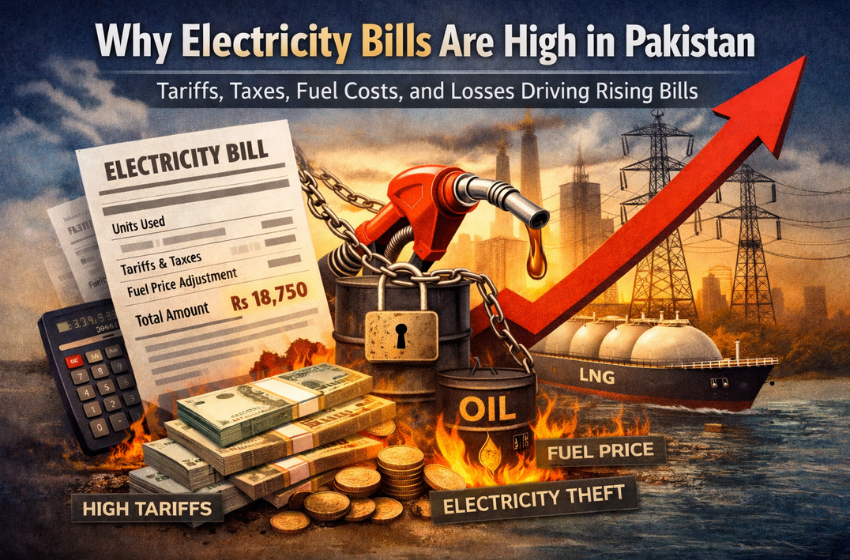
Why Electricity Bills Are High in Pakistan: Key Reasons
Why electricity bills are high in Pakistan has become a major concern for households, businesses, and industries. People often use less power, yet their bills keep rising. This problem does not come from one cause alone. It comes from fuel costs, taxes, power sector debt, electricity theft, and weak infrastructure.
The issue links to deeper problems in Pakistan’s energy system. When one problem grows, it pushes another problem higher. That is why consumers often pay for issues they did not create.
Recent data shows the pressure remains serious. Pakistan’s power sector still faces a circular debt of around Rs1.6 trillion, while transmission and distribution losses remain around 17.55%. These losses raise costs for paying consumers. Let’s find out how!
Why Electricity Bills Are High in Pakistan?
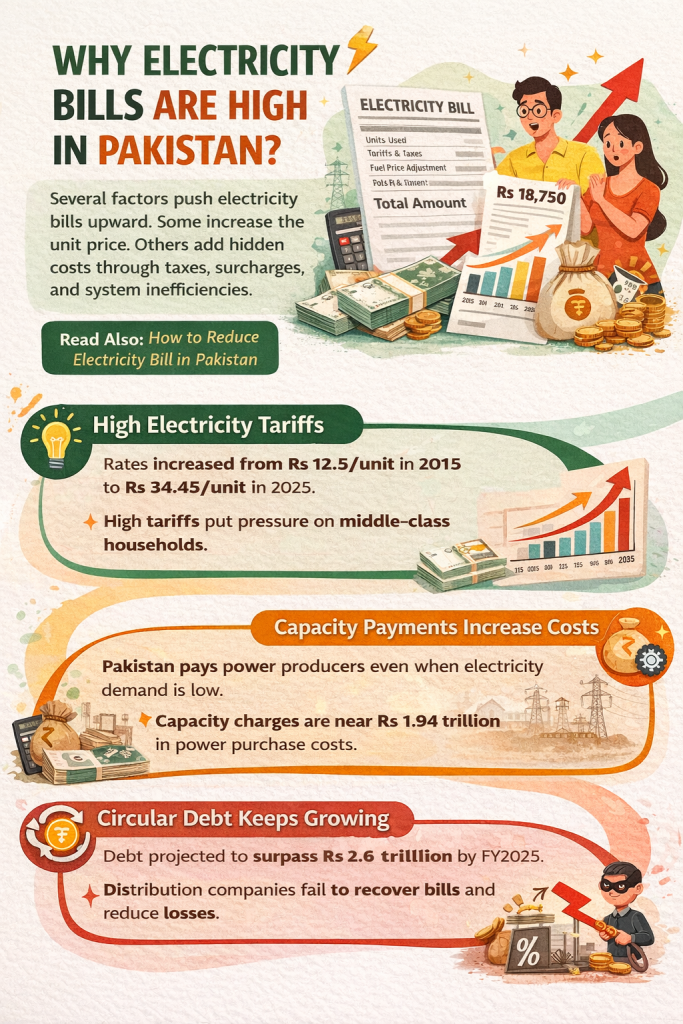
Several factors push electricity bills upward. Some increase the unit price. Others add hidden costs through taxes, surcharges, and system inefficiencies.
High Electricity Tariffs
One major reason is the rise in electricity tariffs. The average tariff has climbed sharply over the past decade. Some estimates show the average tariff rose from around Rs12.5 per unit in 2015 to about Rs34.45 per unit in 2025.
When the per-unit rate rises, consumers pay more even if they use the same number of units. Higher slabs also increase pressure on middle-class households.
This is why the electricity tariff in Pakistan remains a major concern for consumers.
Read Also: Electricity Base Tariff Reduction Plan Submitted to NEPRA
Capacity Payments Increase Costs
Pakistan pays many power producers even when electricity demand stays low. These payments are called capacity payments.
This means consumers pay not only for the electricity they use, but also for idle plants.
Capacity charges have become a major burden. Some estimates place capacity charges near Rs1.94 trillion in the power purchase cost. These payments directly affect the power tariff in Pakistan.
Circular Debt Keeps Growing
Circular debt remains one of the biggest structural problems. When distribution companies fail to recover bills, when subsidies get delayed, or when losses rise, debt builds up. The government often recovers this burden through higher tariffs and surcharges.
Some projections placed circular debt above Rs2.6 trillion in FY2025, though later reports showed some reduction. This is why circular debt in Pakistan’s electricity continues to affect every bill.
Read Also: Power Distribution Companies Loss 472 Billion Rupees Pakistan
Electricity Theft and Line Losses
Electricity theft creates another major burden. When power gets stolen, someone still pays for that loss. In many cases, paying consumers absorb that cost.
NEPRA-linked reporting shows T&D losses stood around 17.55 percent in FY25. Old transmission lines, illegal connections, and poor recovery systems keep this problem alive. This also explains the high electricity unit price in Pakistan.
Fuel Price Adjustments Raise Monthly Bills
Many people focus only on the per-unit electricity rate when they receive a bill. They often think the total amount depends only on the number of units consumed. But electricity bills include more than basic unit charges. Fuel Price Adjustment, or FPA, also adds to the final bill. This charge reflects changes in fuel costs used for power generation.
When imported fuel prices rise, electricity production becomes more expensive. Power companies often pass these added costs to consumers. That is why monthly bills can increase even when electricity use stays the same. Many consumers see a higher bill but do not realize that fuel adjustments have added extra charges. This hidden cost often increases the burden on households.
Pakistan depends on imported fuels such as oil, coal, and liquefied natural gas for part of its electricity generation. This makes the country sensitive to changes in global energy markets. When international fuel prices rise, generation costs increase. These costs often appear later through Fuel Price Adjustments.
Taxes and Surcharges Add Hidden Charges
Many consumers notice that taxes and surcharges make up a large part of the final bill.
A bill often includes:
- Fuel adjustments
- Debt servicing surcharges
- Taxes and duties
- Fixed charges
These charges raise the payable amount beyond energy consumption. This also affects electricity taxes in Pakistan.
Expensive Power Agreements
Some long-term agreements signed with Independent Power Producers have increased electricity costs in Pakistan. Many of these contracts include fixed capacity payments, which means payments continue even when power demand stays low. This raises financial pressure on the power sector. Some agreements also include dollar-linked returns. That means payments to producers rise when the Pakistani rupee loses value against the dollar. As the rupee weakens, the cost of meeting these obligations increases. Those higher costs often move through the system and affect electricity tariffs.
This creates added pressure on consumers because rising generation costs often lead to higher per-unit rates. Even when electricity use does not increase, these contract-related costs can still push bills upward. The burden becomes heavier when currency depreciation combines with existing fuel costs and circular debt. This is why expensive power agreements remain one factor behind rising electricity prices. Without reforms in these agreements, the pressure on tariffs may continue.
Weak Distribution Companies Increase Burden
Poor performance by distribution companies also adds to electricity costs in Pakistan. When DISCOs fail to recover bills, control losses, or improve efficiency, the financial burden grows. Reports showed weak DISCO performance added around Rs397 billion to circular debt in FY25. This shows how operational problems can affect the entire power system.
Poor governance, billing issues, power theft, and outdated infrastructure keep this problem alive. In many cases, these inefficiencies increase system losses and raise overall costs. Those added costs often pass on to paying consumers through higher tariffs and surcharges. As a result, people often pay not only for the electricity they use but also for weaknesses in the system. This is why improving distribution companies remains important for reducing pressure on electricity bills.
Why Solar Growth Has Also Changed the System?
Pakistan has seen rapid solar adoption as many households and businesses look for relief from rising electricity bills. Higher tariffs pushed many consumers toward solar as an alternative. This shift has helped some users lower their monthly costs and reduce dependence on the grid. As solar installations increased, electricity demand patterns also began to change.
This change has created new pressure on the power system. When more consumers rely on solar during the day, grid demand can drop in certain hours and shift to other periods. That can affect revenue recovery for the power sector and create planning challenges for the grid. While solar offers benefits, it has also added new complexities to the system. This is why solar growth has become part of the broader electricity pricing discussion.
How High Bills Affect People?
High electricity bills affect more than household budgets. They reduce the money families have for food, education, healthcare, and other daily needs. When a large share of income goes to utility bills, disposable income falls. This puts pressure on household finances and lowers purchasing power. Many families also cut electricity use, even when it affects comfort and basic needs.
The impact also reaches businesses and the wider economy. Higher electricity costs raise operating expenses for shops, factories, and small businesses. Many businesses pass these costs to customers through higher prices, which can add to inflation. Manufacturing also becomes more expensive, which can affect production and competitiveness.
Read Also: Pakistan Economy Crisis Explained 2026 – Key Reasons
High bills can also increase payment defaults when consumers struggle to pay. That can add stress to the power system and worsen recovery problems. This creates a cycle where financial pressure leads to deeper system problems, and those problems can keep pushing electricity costs higher.
Can Electricity Bills Come Down?
Bills can come down, but reforms matter.
Read Also: How to Reduce Electricity Bill in Pakistan
Pakistan needs:
- Better Recovery Systems: Reducing unpaid bills can lower system losses.
- Lower Line Losses: Modern transmission upgrades can reduce wasted electricity.
- Reform of Capacity Payments: Better contract structures can reduce fixed burdens.
- Less Dependence on Imported Fuel: Cheaper local energy sources can lower generation costs.
- Stronger Governance: Efficient distribution companies can reduce waste and improve billing.
Final Thoughts
In the end, why electricity bills are high in Pakistan comes down to multiple interconnected problems. High tariffs, circular debt, taxes, fuel adjustments, theft, and weak infrastructure all push bills upward.
Consumers often see only the final bill. But behind that bill sits a complex system with deep financial and structural issues.
Until major reforms address those root causes, electricity bills may remain a burden for many Pakistanis.