Saira Imran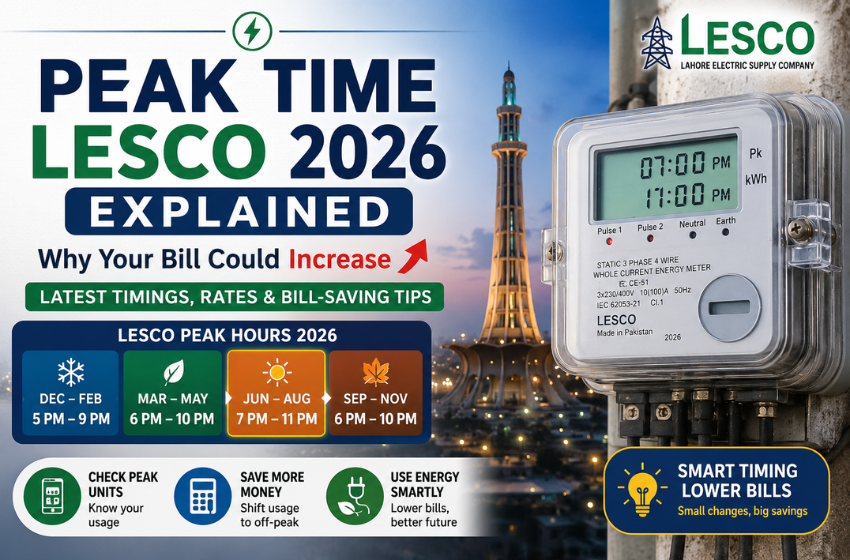
Peak Time LESCO 2026 Explained: Save Money on Bills
As of June 2026, LESCO peak hours are 7 PM to 11 PM. Consumers with TOU meters pay higher electricity rates during these hours. Shifting heavy appliance usage outside peak hours can help reduce monthly electricity bills.
Electricity bills remain a major concern for households across Lahore. One important reason for higher bills is peak-time LESCO. Many consumers focus on the number of units they use but overlook how much electricity they use.
This small detail can make a noticeable difference in monthly expenses.
During my review of recent LESCO bills and TOU tariff structures, I found that households often focus on total units consumed but overlook when they consume those units. In many cases, shifting heavy appliance usage outside peak hours can noticeably reduce monthly electricity costs. Understanding peak timings can help you reduce electricity costs without changing your daily lifestyle.
What Is Peak Time LESCO?
Peak Time LESCO refers to the hours when electricity demand is highest, and consumers on Time of Use (TOU) tariffs pay a higher electricity rate. As of June 2026, LESCO’s peak hours are 7 PM to 11 PM.
During these hours, homes, businesses, and industries consume large amounts of electricity simultaneously. According to LESCO’s Time of Use (TOU) tariff framework, peak-hour pricing helps distribute electricity demand more evenly across the grid and reduces pressure during high-consumption periods.
Expert Insight: Energy regulators use Time of Use tariffs worldwide to encourage consumers to shift electricity usage away from high-demand periods. This approach helps improve grid stability and reduces the need for expensive peak-generation resources.
What are the official LESCO Peak Hours in 2026?
| Months | Peak Hours |
|---|---|
| December – February | 5 PM – 9 PM |
| March – May | 6 PM – 10 PM |
| June – August | 7 PM – 11 PM |
| September – November | 6 PM – 10 PM |
As of June 2026, the current peak time LESCO schedule is 7 PM to 11 PM. All other hours fall under off-peak timing, where electricity costs less.
Why Peak Time Matters More in 2026?
Electricity demand continues to rise across Pakistan. According to data from the National Electric Power Regulatory Authority (NEPRA) and the National Transmission and Dispatch Company (NTDC), summer evening demand consistently reaches the highest levels of the year, making peak-hour management increasingly important for consumers.
Higher summer temperatures, increasing air-conditioner usage, and growing urban populations place additional pressure on the power system.
When demand rises sharply during evening hours, electricity companies need more resources to keep the grid stable. Peak-hour pricing encourages consumers to spread their electricity usage throughout the day instead of concentrating it during busy periods.
Even shifting a few appliances outside peak hours can lower your monthly bill.
Peak Time LESCO Today (June 2026)
Peak time LESCO today is 7:00 PM to 11:00 PM.
For June, July, and August 2026, LESCO consumers fall under the summer schedule.
During these four hours, electricity becomes more expensive for eligible TOU consumers. This period usually records the highest electricity demand because families return home and switch on lights, fans, air conditioners, televisions, and kitchen appliances at the same time.
LESCO Peak Hour Rates 2026
The timing of electricity use directly affects how much you pay.
| Category | Off-Peak Rate | Peak Rate |
|---|---|---|
| Residential TOU | Rs. 36.33/unit | Rs. 43.13/unit |
| Commercial TOU | Rs. 36.33/unit | Rs. 43.13/unit |
| Industrial TOU | Rs. 32.28/unit | Rs. 39.15/unit |
Rates may vary due to taxes, fuel adjustments, quarterly adjustments, and future tariff revisions.
Real-Life Example
In a typical Lahore household, a 1.5-ton inverter AC running for several hours each evening can consume around 3 units daily. When that usage falls between 7 PM and 11 PM during summer, the family pays the higher peak-hour tariff instead of the cheaper off-peak rate.
If those units are consumed during off-peak hours, the cost remains lower. However, if the same units are consumed during peak hours every day, the monthly expense increases substantially.
This difference becomes even more noticeable when multiple appliances operate during peak hours.
Which Appliances Increase Your Bill the Most During Peak Hours?
Some appliances consume much more electricity than others. Using them during peak hours can significantly increase your bill.
Common high-consumption appliances include:
- Air conditioners
- Electric geysers
- Water pumps
- Electric irons
- Washing machines
- Electric ovens
- Electric stoves
- Clothes dryers
For the best savings, try using these appliances before peak hours begin or later at night after the peak period ends.
Electricity Peak Hours in Pakistan 2026
Many consumers assume that LESCO follows a unique peak-hour schedule. In reality, most electricity distribution companies in Pakistan follow similar seasonal timings.
| Season | Peak Hours |
|---|---|
| Dec–Feb | 5 PM – 9 PM |
| Mar–May | 6 PM – 10 PM |
| Jun–Aug | 7 PM – 11 PM |
| Sep–Nov | 6 PM – 10 PM |
Electricity peak hours in Pakistan or Electricity peak hours in Pakistan 2026 schedules similar to LESCO.
Why Do LESCO Peak Hours Change Every Season?
Many consumers wonder why peak hours do not remain the same throughout the year.
The answer lies in changing daylight hours and consumer behavior.
During summer, people stay active later in the evening and use cooling appliances for longer periods. As a result, electricity demand remains high until late at night.
In winter, demand peaks earlier because sunset arrives sooner and heating requirements differ from summer consumption patterns.
LESCO adjusts peak-hour schedules to match these seasonal changes.
Who Pays Peak Hour Charges?
Not every electricity consumer pays separate peak and off-peak rates.
Typically, peak-hour charges apply to consumers who have:
- A TOU (Time of Use) meter
- A three-phase connection
- A sanctioned load that qualifies for TOU billing
Consumers using standard billing arrangements may not see separate peak and off-peak readings on their bills.
Understanding your meter type is important before calculating potential savings.
How to Check Peak Units on a Digital Meter?
Many Lahore consumers never check whether their meter records peak-hour units separately.
The process is simple.
Press the display button on your digital meter and cycle through the readings. Look for labels such as Peak, Pk, or HP. These readings show units consumed during expensive hours.
You should also find an off-peak reading, sometimes labeled as LP.
Compare these figures with the information printed on your electricity bill. Doing so helps you understand where most of your electricity costs come from.
Helpful Formula
If your meter only displays total units and off-peak units:
Peak Units = Total Units − Off-Peak Units
This method allows you to estimate peak-hour consumption accurately.
Peak Time LESCO Calculator: Simple Method
Many users search for a Peak time LESCO calculator, but you can estimate costs manually in less than a minute.
Formula
Peak Units × Peak Rate = Peak Charges
For example:
| Detail | Value |
|---|---|
| Peak Units | 100 |
| Peak Rate | Rs. 43.13 |
| Estimated Peak Cost | Rs. 4,313 |
After calculating peak charges, you must also consider taxes, fuel adjustments, fixed charges, and other applicable fees.
This is why reducing peak-hour usage often produces noticeable savings.
Reduce Peak Hour Electricity Costs
Lowering your electricity bill does not always require reducing overall consumption. Sometimes, changing usage timing is enough.
How Can You Reduce Peak-Hour Electricity Costs?
- Run heavy appliances outside peak hours.
- Avoid using multiple high-load appliances simultaneously.
- Shift AC usage to off-peak periods where possible.
- Monitor peak units on your digital meter.
- Use energy-efficient appliances.
Many households notice savings within the first billing cycle after making these adjustments.
Important: Avoid running multiple high-power appliances simultaneously between 7 PM and 11 PM during the summer season.
Peak Hours Mepco vs LESCO
In most cases, both distribution companies follow similar seasonal peak-hour structures approved by regulators. The exact implementation may vary, but the overall concept remains the same.
Consumers in Lahore and Multan generally experience comparable peak-hour billing systems.
Key 2026 Electricity Facts
| Fact | What It Means |
|---|---|
| Summer peak hours extend until 11 PM | Evening electricity remains expensive for longer |
| TOU consumers pay separate peak rates | Timing directly affects monthly bills |
| Peak-hour rates remain significantly higher | Shifting usage can save money |
| Solar users can still incur peak charges | Solar panels do not eliminate peak billing completely |
These trends make energy management more important than ever for Pakistani households.
Final Thoughts
Understanding peak time LESCO can help you take control of your electricity bill in 2026. Many consumers focus only on the number of units they consume, but the timing of consumption matters just as much. By shifting high-energy appliances outside peak hours and monitoring your usage patterns, you can reduce unnecessary costs and make smarter energy decisions throughout the year.
How We Verified This Information:
This guide was prepared using:
- Official LESCO TOU tariff schedules
- NEPRA-approved tariff structures
- Public electricity billing data
- Current 2026 peak-hour schedules
- Digital meter reading guidelines used by Pakistani DISCOs
Because electricity tariffs can change through quarterly adjustments and regulatory decisions, consumers should always verify the latest rates on the official LESCO website before making billing calculations.
FAQs
Peak time LESCO refers to the hours when electricity demand is highest, and consumers on TOU tariffs pay a higher per-unit rate.
For June, July, and August 2026, peak hours are 7 PM to 11 PM.
No. Peak-hour billing generally applies to consumers with TOU meters and qualifying electricity connections.
Press the display button on your digital meter and look for readings marked Peak, Pk, or HP.
Electricity demand reaches its highest level during these hours. Higher rates encourage consumers to spread usage throughout the day and reduce pressure on the power grid.
Not always. Solar users who import electricity during peak hours may still receive peak-hour charges on their bills.