Saira Imran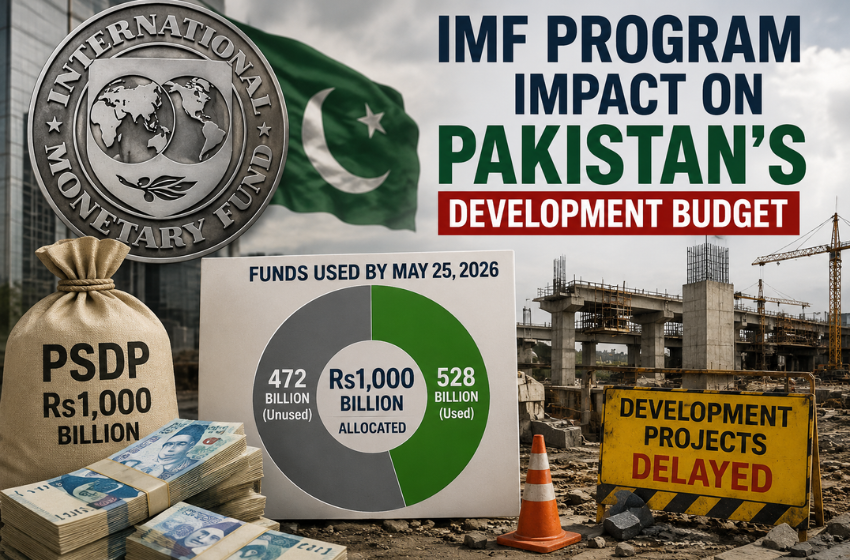
IMF Program Impact on Pakistan’s Development Budget in 2026
Pakistan’s development budget is once again in the spotlight. New government data shows that a large portion of the funds allocated for development projects remains unused. Experts believe that conditions linked to the IMF program’s impact on Pakistan’s development budget have played a major role in slowing down development spending.
This issue could affect roads, schools, hospitals, infrastructure projects, and future economic growth. It may also impact job creation and public services across the country.
Here is what the latest figures reveal and what they mean for ordinary Pakistanis.
What Is the Impact of the IMF Program on Pakistan’s Development Budget?
Pakistan’s development budget has come under pressure due to fiscal restrictions linked to the IMF program. To maintain financial discipline and meet IMF targets, the government has limited its development spending. As a result, progress on many public projects has slowed.
Under the Public Sector Development Program (PSDP), the government allocated Rs1,000 billion for development projects. However, by May 2026, only Rs528 billion had been utilized. This means nearly half of the allocated funds remained unused, raising concerns about delays in important infrastructure and development initiatives.
How Much PSDP Funding Was Used in 2026?
The government set aside Rs1,000 billion for PSDP projects during the fiscal year. However, ministries, divisions, and government departments spent only Rs528 billion between July 2025 and May 25, 2026.
Officials say strict IMF-related fiscal measures and limited financial resources have reduced development spending. Consequently, many projects remain incomplete, while the funding required to finish ongoing projects continues to increase. This situation has created additional challenges for economic growth, infrastructure development, and job creation across the country.
Why This Matters for Pakistanis?
Development projects directly affect daily life. When governments invest in roads, transport systems, schools, hospitals, water projects, and energy infrastructure, people benefit from better services and more job opportunities.
When development spending slows down:
- Infrastructure projects take longer to finish.
- New jobs become harder to create.
- Economic activity slows.
- Public services improve more slowly.
- Investors may delay future investments.
This is why the latest development budget figures have attracted significant attention.
Major Drop in Development Fund Usage
According to a working paper presented before the Annual Plan Coordination Committee meeting chaired by Planning Minister Ahsan Iqbal, only Rs528 billion out of the allocated Rs1,000 billion development budget has been utilized.
The government had set aside these funds under the Public Sector Development Program, and these figures cover spending from July 2025 to May 25, 2026. This means nearly half of the allocated development funds remain unused.
Such a large gap raises concerns about the pace of ongoing projects and future economic development.
IMF Program Linked to Lower Development Spending
Government officials believe that strict financial discipline under the IMF program has affected development spending. Pakistan remains under pressure to control fiscal deficits and manage public finances carefully. As a result, authorities have prioritized financial stability and budget control.
While these measures help strengthen economic management, they also reduce the government’s ability to spend aggressively on development projects. This has created a difficult balance between economic reforms and infrastructure growth.
Ahsan Iqbal Warns About Falling Development Resources
Speaking during the Annual Plan Coordination Committee meeting, Federal Minister for Planning Ahsan Iqbal highlighted serious concerns regarding development financing. He stated that funding available for development projects has been declining for several years.
According to the minister, investment levels have fallen sharply. He said investment as a percentage of GDP has dropped from 2.6 percent to only 0.6 percent. This decline shows how development spending has lost momentum over time. The minister warned that reduced investment can slow economic growth and limit future opportunities.
Thousands of Projects Need More Funding
The government is currently working on development projects worth approximately Rs5 trillion. However, officials estimate that around Rs10 trillion will be required to complete ongoing projects. This huge funding gap presents a major challenge.
Without sufficient financial resources, many projects may face delays or remain unfinished for years. Incomplete projects often increase costs because inflation and rising construction expenses make completion more expensive over time.
Provinces Seeing Higher Development Spending
Ahsan Iqbal also pointed out an important shift in development spending. According to him, provinces have become financially stronger in recent years.
Provincial development budgets have increased while federal development spending has remained under pressure. This means provinces now have greater capacity to launch and finance their own projects.
However, major national infrastructure projects still depend heavily on federal funding. Therefore, reduced federal spending continues to affect many large-scale initiatives.
Ministries Requested Three Times More Funds
For the upcoming fiscal year, ministries reportedly requested Rs3 trillion in development funding. However, available federal resources remain limited.
The federal development program remains close to the Rs1,000 billion level that existed in 2018. Because of these constraints, the government may only continue with selected high-priority projects.
Officials will likely focus on projects that deliver the greatest economic benefits and have the highest completion rates.
What Could Happen Next?
Several possible outcomes may emerge during the next fiscal year.
- More Project Prioritization: The government may focus only on projects that are close to completion.
- Slower Infrastructure Expansion: Some new projects may be postponed until additional funding becomes available.
- Greater Provincial Role: Provincial governments may take a larger role in financing local development initiatives.
- Continued IMF Compliance: Pakistan is expected to continue following IMF-backed reforms to maintain economic stability and access to international financing.
What It Means for the Economy?
Development spending is often considered an engine of economic growth. Lower spending can reduce construction activity, private sector opportunities, and employment generation.
At the same time, fiscal discipline helps control financial risks and strengthens confidence among international lenders. Pakistan therefore faces a complex challenge.
The government must balance economic reforms with the need for development and growth. How effectively it manages this balance could shape the country’s economic future and solve social problems over the coming years.
Final Thoughts
The latest figures reveal a significant slowdown in Pakistan’s development spending. With only Rs528 billion used out of a Rs1,000 billion allocation, concerns are growing about delays in infrastructure and public sector projects.
While IMF-backed fiscal reforms aim to improve financial stability, they have also limited the government’s ability to spend on development. The challenge ahead is finding a balance between economic discipline and the investment needed to support growth, jobs, and better public services.
FAQs
Government officials say IMF-related fiscal restrictions and limited financial resources have reduced development spending.
Out of Rs1,000 billion allocated under PSDP, only Rs528 billion had been spent by May 25, 2026.
PSDP stands for Public Sector Development Program. It is the federal government’s main program for funding development projects.
Officials estimate that around Rs10 trillion will be required to complete ongoing development projects.
No. The government is expected to continue selected priority projects while managing financial constraints.