Saira Imran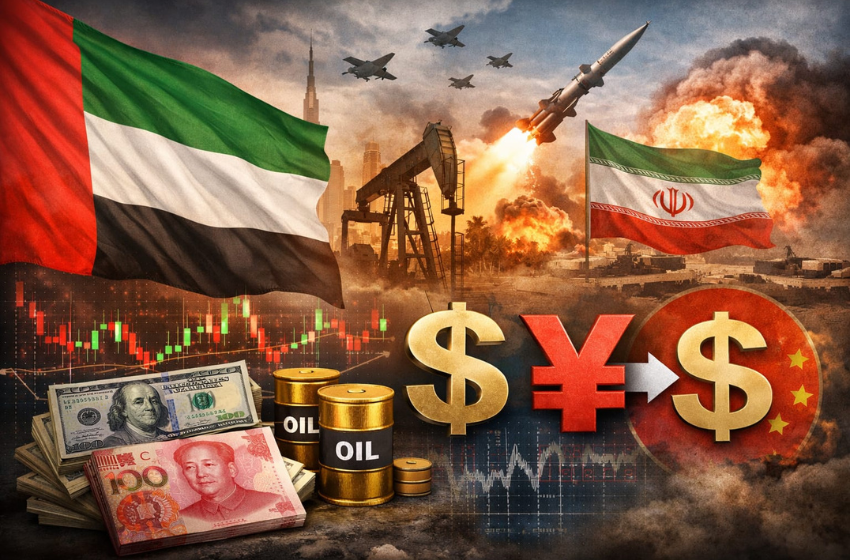
UAE Financial Safety Amid Iran War: Currency Tensions Rise
UAE financial safety amid Iran war is becoming a major global economic concern as tensions in the Middle East intensify.
Regional markets have already shown signs of stress as geopolitical risk rises. Analysts say concerns over oil routes, capital flows, and investor confidence have made the crisis more than a political issue. It is now also a financial risk with possible global spillover effects.
Rising concerns over UAE’s financial stability during the conflict
Recent reports from international media show that the United Arab Emirates has raised serious concerns about its financial stability if the Iran conflict escalates further. According to discussions highlighted in The Wall Street Journal, UAE officials fear that prolonged instability could weaken investor confidence and pressure their position as a global financial hub.
The Iran war 2026 impact on the UAE economy is already being assessed by global financial institutions. Analysts warn that even indirect disruptions in the region could trigger capital outflows, volatility in markets, and reduced foreign investment in the Gulf region.
UAE seeks US protection and financial backup
UAE officials have reportedly requested that the United States consider a financial safety framework in case the regional war intensifies. This includes discussions on liquidity support and emergency financial tools.
One major proposal is the US dollar swap line with the UAE, which would allow the UAE central bank to access US dollars during a liquidity shortage. This system is already used by major economies like Japan, the UK, and the European Union, especially during financial crises.
However, US authorities remain cautious, as such agreements are usually limited to countries with deep financial interdependence with the US economy.
Currency alternatives and strategic warnings
In discussions with US officials, UAE central bank governor Khaled Mohamed Balama reportedly raised the possibility of alternative currency usage. This includes shifting oil trade settlements if dollar shortages emerge.
The growing UAE yuan adoption threat has raised global attention. UAE officials indicated that in extreme conditions, they may consider using the Chinese yuan or other currencies for trade settlements, especially in oil transactions.
This signals a potential shift in global trade dynamics if geopolitical tensions continue to rise.
Economic risks and global financial implications
The UAE maintains strong foreign reserves of around $270 billion and a stable currency peg to the US dollar. However, experts warn that prolonged conflict could still create pressure on capital markets.
Financial analysts believe that regional instability may reduce investor trust in Gulf markets. At the same time, institutions like S&P Global suggest that the UAE’s strong reserves and banking system still provide a buffer against immediate collapse.
However, risks such as oil supply disruption, infrastructure damage, and global recession fears remain active if the conflict expands.
Broader geopolitical and financial shift
The ongoing situation also reflects a deeper geopolitical realignment. The UAE has strengthened its engagement with the US while reassessing its regional ties. At the same time, it has reduced certain diplomatic engagements with Iran due to security concerns.
Read Also: Pakistan Offers to Host Iran US Talks Second Round in Islamabad
International financial bodies like the IMF and World Bank have also warned that recovery in the region may slow down if the conflict continues without a diplomatic resolution.
Conclusion
The situation shows how deeply regional conflicts can affect global financial systems. The UAE now stands at a critical point where it must balance stability, diplomacy, and financial resilience.
Ultimately, UAE financial safety amid Iran war will depend on how quickly geopolitical tensions ease and how effectively global financial partners respond to emerging risks.