Saira Imran
Pakistan strengthens anti-money laundering rules with new cash reporting limits and digital asset oversight
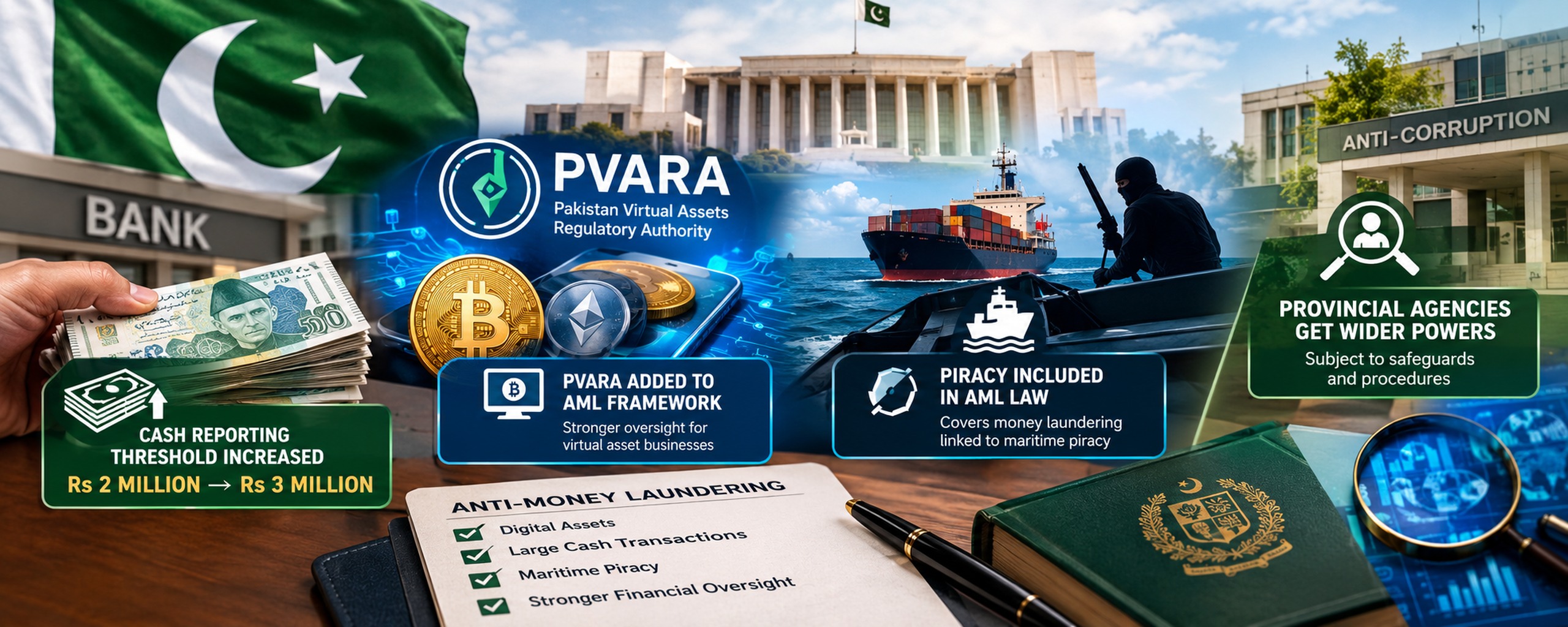
Pakistan has approved new measures to strengthen its anti-money laundering system. The decisions cover digital assets, large cash transactions and maritime piracy. They also aim to improve how financial authorities identify and investigate suspicious money flows.
The National Executive Committee on Anti-Money Laundering and Countering the Financing of Terrorism approved the changes at a meeting chaired by Finance Minister Muhammad Aurangzeb on October 27, 2026. News reports published on October 28 confirmed the decisions.
The measures could affect banks, virtual asset businesses, and government agencies. For ordinary citizens, the key point is understanding how cash reporting works and why financial institutions may ask questions about certain transactions.
What Are Pakistan’s New Anti-Money Laundering Rules?
The committee approved three main measures. It raised the reporting threshold for large cash transactions from Rs2 million to Rs3 million. It also approved adding the Pakistan Virtual Assets Regulatory Authority (PVARA) to the regulatory framework under the Anti-Money Laundering Act.
In addition, the committee approved adding a provision on piracy from the Pakistan Maritime Zones Act 2023 to the offences covered by the anti-money laundering law. The committee also considered wider powers for provincial anti-corruption agencies, subject to further safeguards and procedures.
According to reports, the decisions form part of Pakistan’s wider efforts to strengthen its system for preventing money laundering and the financing of terrorism.
1. Cash Transaction Reporting Limit Rises to Rs3 Million
One of the main changes concerns large cash transactions at banks. The committee approved an increase in the reporting threshold from Rs2 million to Rs3 million.
Banks report qualifying cash transactions to the Financial Monitoring Unit, or FMU. This unit receives and analyses financial reports to identify possible money laundering and other financial crimes.
The change means the threshold for a Currency Transaction Report has increased by 50 percent. However, people should not confuse this reporting threshold with permission to carry out any transaction without checks.
Does this mean cash transactions below Rs3 million are exempt?
No. The threshold for a Currency Transaction Report is different from the rules for a Suspicious Transaction Report.
A Currency Transaction Report relates to cash transactions that meet the prescribed reporting threshold. A Suspicious Transaction Report concerns activity that raises concerns about possible financial crime. A bank may identify suspicious activity even when a transaction falls below the cash reporting threshold.
People should not split payments or change transaction amounts to avoid reporting requirements. Banks may review the wider pattern of activity when they assess a transaction.
For most customers, the practical step is simple: keep clear records for large payments and provide genuine information when a bank asks about the source or purpose of funds.
2. Pakistan’s Crypto Regulator Gets Anti-Money Laundering Powers
The committee also approved the inclusion of PVARA in Schedule IV of the Anti-Money Laundering Act. This step brings the virtual asset regulator into the law’s framework for anti-money laundering and countering the financing of terrorism oversight.
PVARA regulates virtual assets and businesses that provide services related to them. These services can include activities involving digital assets such as cryptocurrencies.
The authority’s role matters because digital asset transactions can move across platforms and borders. Regulators need systems that help them identify suspicious activity and make sure businesses follow the relevant rules.
Under the reported decision, PVARA will work with the Financial Monitoring Unit to develop arrangements for reporting suspicious transactions by virtual asset service providers. The reporting process will also need to follow the relevant registration and regulatory requirements.
PVARA already publishes information about licensing and compliance on its official website. Businesses working in the virtual asset sector should check the latest official rules rather than rely on social media claims or informal advice.
What does this mean for people who use cryptocurrency?
The decision does not, by itself, mean that every cryptocurrency transaction is illegal. Instead, it strengthens regulatory oversight of the businesses and services operating in the sector.
Users may face identity checks, transaction monitoring, and requests for information when they use regulated services. Businesses may also need stronger systems for record-keeping and reporting.
Anyone buying, selling or holding digital assets should check the legal requirements that apply to their activity. They should also use reliable records and avoid services that make unsupported claims about being approved by regulators.
3. Maritime Piracy Added to the Money Laundering Framework
The committee approved the inclusion of Section 28 of the Pakistan Maritime Zones Act 2023 in Schedule I of the Anti-Money Laundering Act.
This provision deals with maritime piracy. Adding it to the list of relevant offences allows authorities to address money laundering connected to piracy under the anti-money laundering framework.
The change matters because authorities can investigate not only an underlying crime but also the movement or concealment of money gained through that crime. Financial investigations can help investigators trace assets and identify people who may benefit from illegal activity.
Reports have cited different details about the possible punishment for piracy. Readers should consult the applicable law and official notifications for the exact penalty rather than rely on an unverified figure.
4. Provincial Anti-Corruption Powers Remain Subject to Safeguards
The committee also considered giving provincial anti-corruption agencies powers under the Anti-Money Laundering Act.
Reports say the committee approved this step in principle, but final implementation depends on standard operating procedures. These procedures aim to define how agencies can use their powers and reduce the risk of misuse.
The proposed safeguards may cover the identification of the real owners of assets, financial investigations, and methods for tracing money and property.
Clear procedures matter because financial investigations can affect individuals, businesses and public institutions. Authorities need to follow the law, document their actions and use their powers within the limits set by the relevant rules.
Why Has Pakistan Strengthened Its Financial Monitoring System?
The latest decisions form part of Pakistan’s wider work to improve its anti-money laundering and counter terrorism financing framework. Reports link several of these measures to commitments under Pakistan’s programme with the International Monetary Fund.
The committee also reviewed the performance and capacity of the Financial Monitoring Unit. It discussed the use of artificial intelligence and machine learning to improve financial analysis.
These technologies may help authorities identify unusual transaction patterns and manage large amounts of financial data. However, technology alone cannot guarantee accurate results. Effective monitoring also depends on reliable information, trained staff, clear procedures, and proper oversight.
What Should Banks, Crypto Businesses and Customers Do Now?
Banks and virtual asset businesses should follow official instructions and check when the approved changes take effect through the relevant notifications. They should also maintain accurate records and follow the reporting rules that apply to them.
Customers should keep receipts, contracts, and other documents that explain large payments. Crypto users should check the status of service providers and review current regulatory guidance before sending money or opening an account.
Most importantly, the new cash reporting threshold does not remove a bank’s responsibility to review suspicious activity. Nor does the inclusion of PVARA in the anti-money laundering framework mean that every digital asset activity is automatically prohibited.
What Happens Next?
The practical impact of these decisions will depend on official notifications, implementation procedures and coordination between regulators. Banks, crypto businesses and customers should follow updates from the relevant authorities.
For the public, the main lesson is to keep accurate financial records and understand that the Rs3 million reporting threshold does not prevent banks from reviewing suspicious transactions. Stronger oversight of digital assets and crime-related funds will also depend on clear rules and consistent enforcement.