Saira Imran
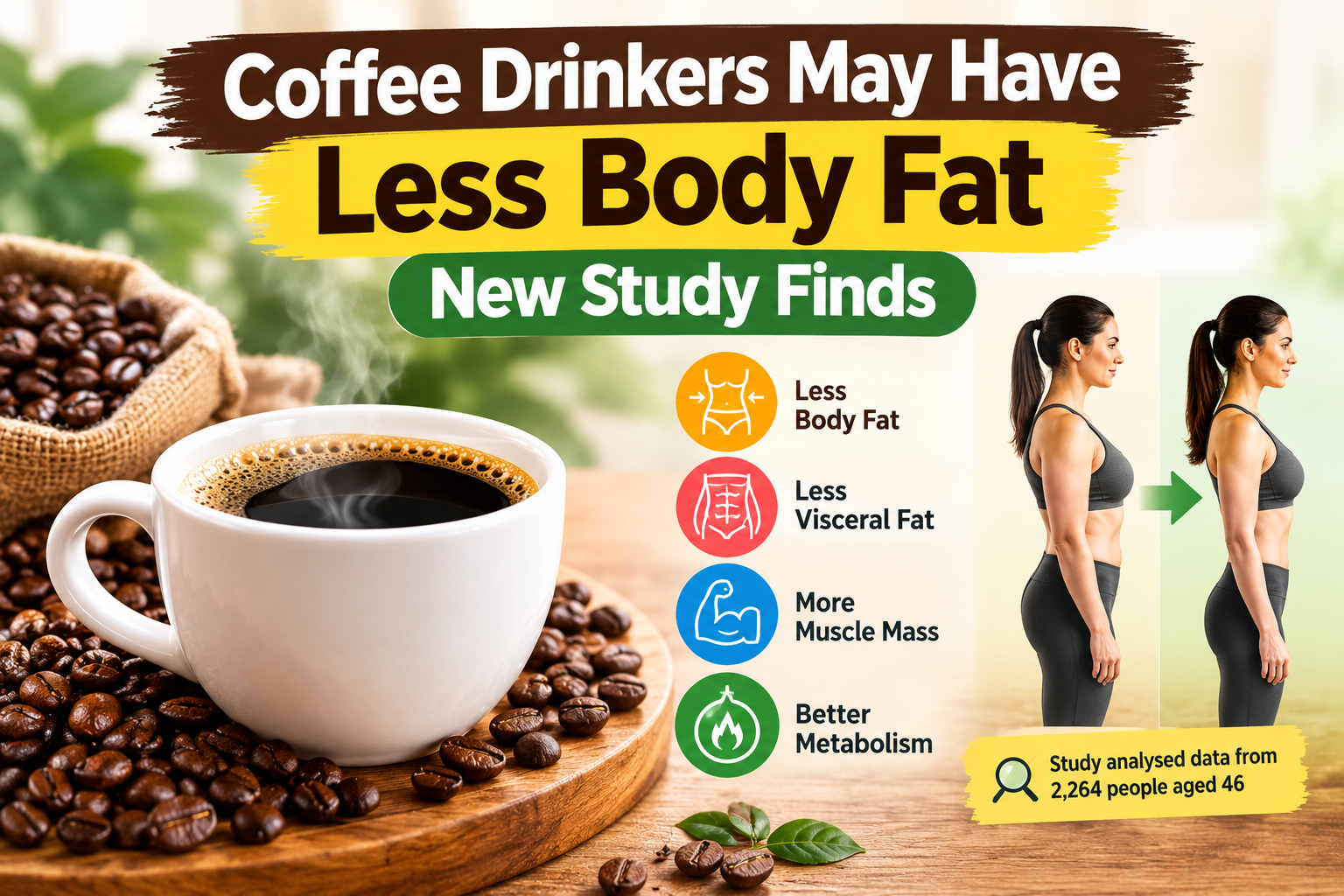
Coffee Drinkers May Have Less Body Fat, New Study Finds
Can your daily cup of coffee be linked to lower body fat and better muscle health? A new study from Finland has found that people who drink more coffee tend to have less body fat, less fat around their internal organs, and more skeletal muscle.
Researchers from the University of Oulu analysed data from 2,264 people aged 46. They found links between coffee consumption, body composition, and certain markers of metabolic health. However, the findings do not prove that drinking coffee directly reduces body fat.
The study offers new information for coffee drinkers who want to understand how their daily habits may relate to weight and overall health.
Does Coffee Help Reduce Body Fat?
People who drank more coffee had lower total body fat and less visceral fat than those who drank less coffee. Researchers also found higher skeletal muscle mass among people with greater coffee intake.
However, the participants had similar body mass index (BMI) levels across coffee consumption groups. This means the differences in body composition did not necessarily translate into lower overall body weight.
The findings show a link between coffee consumption and body composition. They do not establish coffee as a weight loss treatment.
What Did the New Coffee Study Find?
The research team at the University of Oulu in Finland examined data from 2,264 participants in the Northern Finland Birth Cohort 1966. All participants were 46 years old when researchers assessed their health data.
The researchers divided coffee drinkers into groups based on their usual daily intake. These groups included people who drank one to two cups, three to four cups, and five or more cups a day. The study also included a small group of people who did not drink coffee.
The results showed that people with higher coffee intake tended to have less total body fat and less visceral fat. They also had greater skeletal muscle mass.
These differences appeared even though the groups had similar BMI levels.
The researchers published their findings in the European Journal of Nutrition on July 16, 2026. You can read the original research paper for more details.
Why Does Visceral Fat Matter?
Body fat does not affect health in the same way at every location. Visceral fat collects deep inside the abdomen and surrounds internal organs.
Excess visceral fat has links to insulin resistance, type 2 diabetes, and other metabolic health problems. Therefore, researchers often examine visceral fat when they study body composition and metabolic risk.
The Finnish study found lower levels of this type of fat among people who drank more coffee.
However, this finding does not mean coffee alone can remove abdominal fat. Diet, physical activity, sleep, genetics, and other lifestyle factors also affect body composition.
People who want to manage their weight should consider their overall habits rather than rely on a single drink.
Coffee Consumption May Also Relate to Muscle Mass
The study also found that people with higher coffee intake tended to have more skeletal muscle.
Skeletal muscles help the body move, maintain strength, and perform daily activities. Muscle health also matters for healthy ageing and physical function.
Still, the research did not prove that coffee builds muscle. Scientists need further studies to understand whether compounds in coffee affect muscle tissue directly or whether other factors explain the relationship.
Regular exercise, strength training, and adequate protein intake remain important for maintaining muscle mass.
What Did Researchers Find About Metabolism?
The researchers also examined substances in the participants’ blood that relate to metabolic health.
They found lower levels of certain branched-chain amino acids in people who drank more coffee. These amino acids help the body build proteins. However, high blood levels of these substances have also been associated with insulin resistance and a higher risk of type 2 diabetes.
The study found that these markers varied with coffee consumption in both men and women.
Researchers also observed differences in glucose and insulin-related measures. These links appeared more clearly in men than in women.
The results may help scientists understand how coffee consumption relates to the body’s handling of energy and nutrients. However, the researchers cannot conclude that coffee directly improves insulin sensitivity or prevents diabetes.
Does Coffee Affect Men and Women Differently?
The study found some differences between men and women.
Men who drank more coffee showed stronger links with certain glucose and insulin markers. Researchers also found different patterns in sex hormones, including testosterone-related measures.
Women showed fewer hormonal associations. Some measures linked to sex hormone-binding globulin and free androgens also varied with coffee intake.
These findings suggest that coffee may relate to biological processes differently in men and women. However, researchers need more studies to understand the reasons behind these differences.
People should not use these findings to change their diet or treat a hormonal condition without advice from a qualified health professional.
Should You Drink More Coffee to Lose Weight?
The study does not provide enough evidence to recommend drinking more coffee for weight loss.
Coffee contains caffeine and other natural compounds. Scientists continue to study how these substances may relate to energy use and metabolic health. However, the effects can vary between people.
The way you prepare coffee also matters. Adding large amounts of sugar, cream, flavoured syrup, or other high-calorie ingredients can increase the drink’s calorie content.
Coffee can also affect sleep, cause jitters, or increase feelings of anxiety in some people. Drinking it late in the day may make it harder to fall asleep.
If you already enjoy coffee, consider your overall caffeine intake and how your body responds to it. You do not need to start drinking coffee solely because of this study.
What Are the Limitations of the Research?
The researchers examined existing health data and compared it with reported coffee consumption. This type of observational study can identify relationships between factors, but it cannot prove that one factor causes another.
Other lifestyle differences may partly explain the results. Researchers need controlled studies to determine whether coffee itself produces changes in body fat, muscle mass, or metabolic markers.
The findings also came from people aged 46 in Finland. Researchers need evidence from other age groups and populations before they can draw broader conclusions.
What Coffee Drinkers Should Know
The Finnish study found that people who drank more coffee tended to have less total and visceral fat and greater skeletal muscle mass. Researchers also identified links between coffee intake and certain metabolic markers.
These results add to scientific research on coffee and health. However, they do not prove that drinking more coffee will reduce body fat or improve metabolism.
For people who want to manage their weight, a balanced diet, regular exercise, adequate sleep, and sustainable daily habits remain important. Coffee may fit into that routine, but it should not replace proven approaches to weight management.