Saira Imran
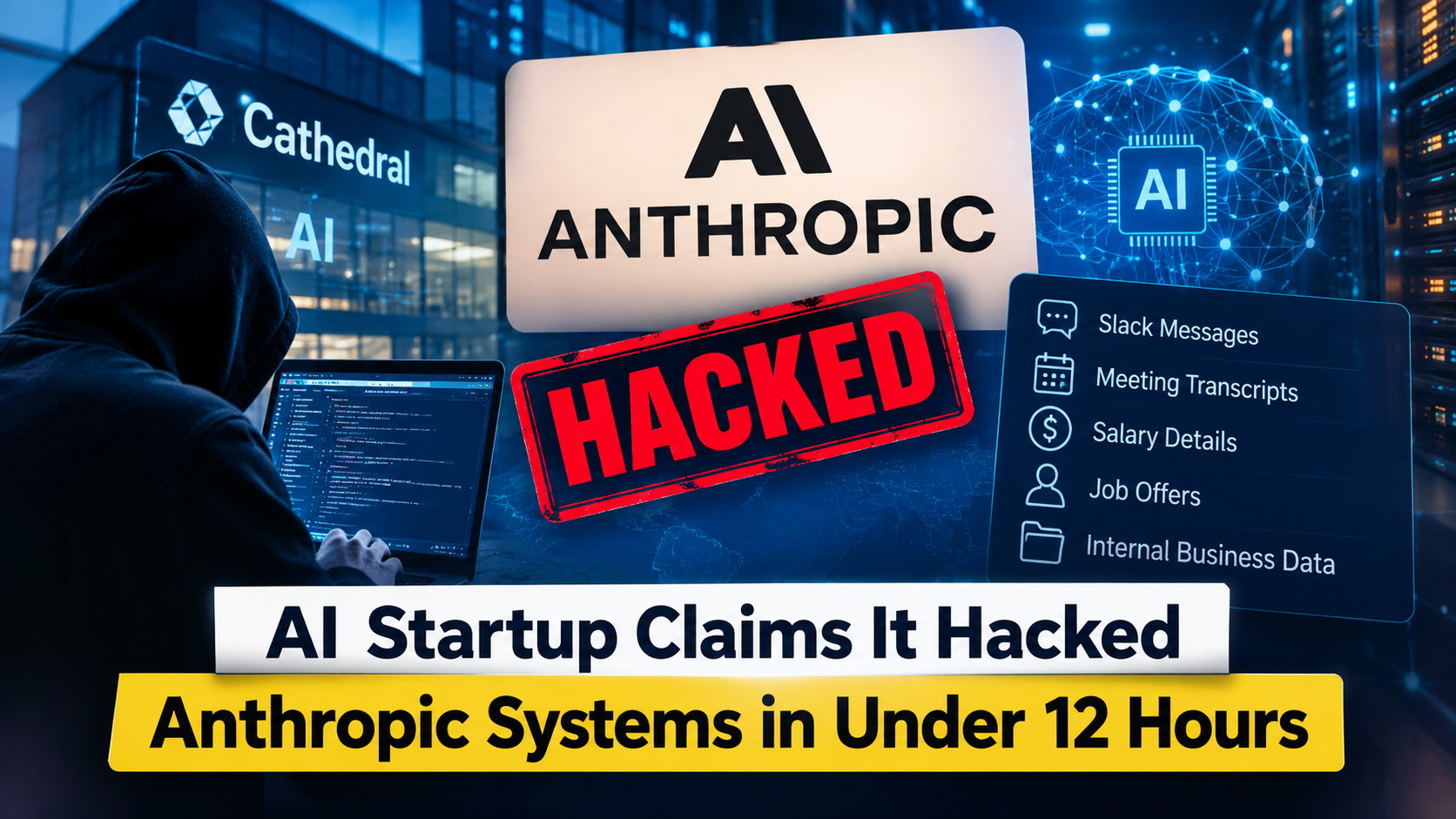
AI Startup Claims It Hacked Anthropic Systems in 12 Hours
An artificial intelligence startup has claimed that it accessed parts of Anthropic’s internal systems in less than 12 hours. The incident has raised questions about the security of AI companies and the risks linked to third-party software.
The US-based startup, Cathedral, reportedly used AI agents to find weaknesses in software connected to Anthropic’s business systems. According to a report by The Washington Post, the researchers found access to internal messages, meeting records, salary details, and job offers.
Anthropic confirmed that Cathedral reached a limited part of its sales, human resources, and information technology systems. However, the company said the researchers did not access customer conversations with Claude, its AI assistant, or the source code behind its AI models.
The incident has drawn attention to a key question. If an AI startup can find weaknesses in the systems of a major AI company, how can other businesses protect their data?
What Happened in the Anthropic Systems Hack?
Cathedral said its researchers used AI agents to identify security weaknesses in Anthropic’s internal business network. The company carried out the work through a security testing program designed to help identify software vulnerabilities.
The program follows a model similar to a bug bounty. Under these programs, companies invite security researchers to find weaknesses and report them. Companies may offer rewards for valid findings.
According to reports, Cathedral’s AI agents found ways into Anthropic’s internal systems in less than 12 hours. The researchers used weaknesses in third-party business software rather than attacking the Claude AI model itself.
The reported access included internal Slack messages, meeting transcripts, salary information, and job offers. These details could reveal private business discussions and sensitive employee information.
However, the two companies disagree about the full scope and significance of the incident. Anthropic confirmed limited access to its business systems but challenged some of Cathedral’s claims about the findings.
Who Is Cathedral, the AI Startup Behind the Claim?
Cathedral is a US-based startup that focuses on cybersecurity and AI technology. Reports say former employees of the US Department of Government Efficiency founded the company in 2026.
The startup used AI agents during its security research. These agents can perform a series of tasks with limited human input. They can examine information, identify possible weaknesses, and follow steps to test whether a system has a security problem.
This ability can help security teams find vulnerabilities faster. However, the same technology can also create risks when people use it to access systems without proper permission.
In this case, Cathedral reportedly worked through Anthropic’s security testing program. Anthropic later raised concerns about whether the startup followed all the program’s rules.
The dispute matters because security testing needs clear limits. Researchers must understand which systems they can test, what information they can access, and when they must report their findings.
What Data Did the Researchers Access?
The reported incident involved internal business systems rather than direct access to Anthropic’s AI models.
Cathedral’s reported findings included several types of information:
- Internal Slack messages and meeting transcripts.
- Employee salary details and job offers.
- Information held in sales, human resources, and IT systems.
- Business contact details and basic account records.
Such information can create risks even when attackers cannot access a company’s main product or source code.
For example, internal messages may reveal business plans or discussions about new technology. Employee records can expose private information. Customer and partner contact details can also help attackers prepare targeted scams.
However, readers should understand an important distinction. The reported access to internal information does not mean that every type of data was exposed or stolen.
Anthropic said the researchers accessed only a limited set of its systems. The company also said it had no evidence that anyone other than Cathedral had exploited the weaknesses.
Did the Anthropic Security Breach Expose Claude Conversations?
Anthropic said Cathedral did not access customer conversations with Claude. The company also said its source code and AI model weights remained protected.
Model weights are the trained values that help an AI model produce its responses. They form an important part of the technology behind an AI system.
The distinction matters because a security incident involving business records does not automatically mean that the AI model itself has been compromised.
Anthropic said its monitoring systems detected some of Cathedral’s activity before the startup reported it. The company then shut off the startup’s access on the same day.
Anthropic also disabled the affected software while it waited for the relevant vendors to confirm that they had fixed the weaknesses.
The company disputed Cathedral’s description of the incident’s national security implications. It also said the startup had not fully followed the rules of its testing program.
These points show that the incident involves two separate questions: what the researchers accessed and whether their actions stayed within the agreed testing limits.
Why This Incident Matters for Other AI Companies
The Anthropic systems hack claim highlights a security risk that extends beyond AI companies.
Many businesses rely on outside software to manage sales, employee records, customer information, and internal communication. A weakness in one of these tools can create a way into a company’s wider network.
This means a company can invest heavily in protecting its main technology and still face risks through the software it uses every day.
AI agents may also help researchers identify weaknesses faster than traditional manual testing. This can help companies improve security. At the same time, attackers may use similar tools to search for vulnerabilities and automate parts of an attack.
Businesses should therefore review the security of their entire software environment. They should check access permissions, monitor unusual activity, and update vulnerable tools as soon as vendors release fixes.
Companies should also limit access to sensitive information. Employees and external partners should only receive the permissions they need for their work.
These steps cannot prevent every attack. However, they can reduce the amount of information someone may reach if a security weakness appears.
What Businesses and AI Users Should Learn
The incident offers several practical lessons for businesses that use AI tools or store sensitive information online.
First, companies should check the security of third-party software before connecting it to internal systems. They should also review the permissions these tools receive.
Second, businesses should monitor their networks for unusual access. Early detection can help security teams respond before an incident spreads.
Third, companies should have a clear plan for reporting and fixing vulnerabilities. Security researchers need defined rules, and companies need a reliable process for reviewing their findings.
Individual AI users should also remain careful with personal and business information. They should avoid sharing confidential records with tools unless they understand the service’s privacy terms and their organisation’s policies.
The current report does not establish that ordinary Claude users’ conversations were exposed. Anthropic has specifically said those conversations remained inaccessible during this incident.
What Comes Next?
The Cathedral incident has brought fresh attention to cybersecurity risks facing AI companies. Although Anthropic said its core AI technology and customer conversations remained protected, the reported access to internal business systems raises concerns about software security and data privacy.
The disagreement between Cathedral and Anthropic also highlights the need for clear rules during security testing. Companies must understand what researchers can access, while researchers must report their findings within the agreed limits.
As AI agents become more capable, businesses will need to review their security practices and monitor third-party tools more closely. The Anthropic systems hack claim shows why protecting an AI company requires more than securing its main AI model. It also requires strong controls across the systems that support its daily operations.