Saira Imran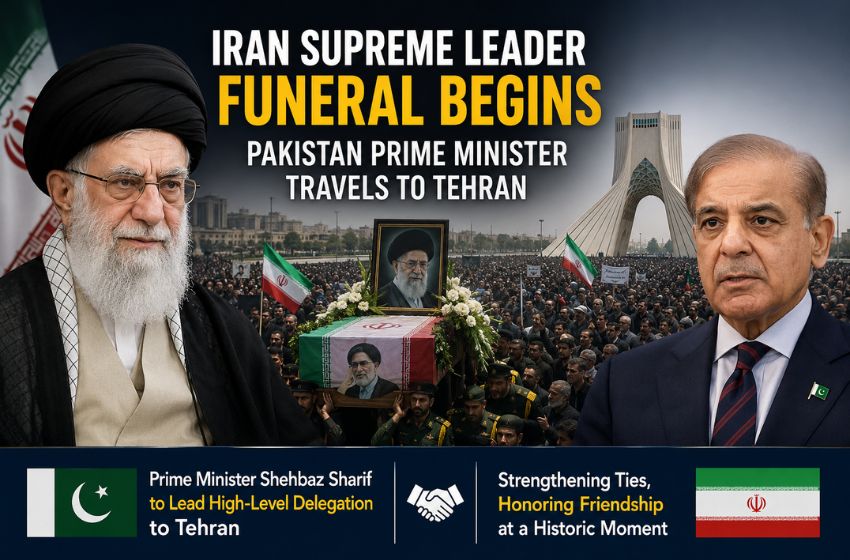
Iran Supreme Leader Funeral Begins as Pak PM Heads to Tehran
The funeral ceremonies for Iran’s former Supreme Leader have officially started. Leaders and senior officials from many countries are gathering in Tehran to attend the events. Pakistan is also taking part, with Prime Minister Shehbaz Sharif leading a high-level delegation to Iran.
The ceremonies are expected to continue for seven days before the final burial takes place in Mashhad. The visit by Pakistan’s leadership has drawn attention because it reflects the close diplomatic ties between Islamabad and Tehran during an important moment in Iran’s history.
Funeral of Supreme Leader Ayatollah Seyyed Ali Khamenei
Iran has started the funeral and burial ceremonies for former Supreme Leader Ayatollah Seyyed Ali Khamenei. Pakistan has sent senior officials to attend the ceremonies. Prime Minister Shehbaz Sharif is expected to arrive in Tehran today with a high-level delegation. The events are likely to strengthen diplomatic engagement between the two neighboring countries.
Why This Funeral Ceremony Matters?
This is more than a state funeral. The ceremonies have become an international diplomatic event. Countries from different parts of the world are sending representatives to show respect and support.
For Pakistan, the visit highlights the importance of maintaining strong relations with Iran. The two countries share a long border and work together on trade, regional security, border management, and economic cooperation.
People are also searching for updates because these events could influence regional politics in the coming weeks.
Funeral Ceremonies Begin in Tehran
The official funeral ceremonies began on July 3 in Tehran. The events will continue until July 9. During this period, memorial gatherings, funeral prayers, and public tribute ceremonies are being held.
A major tribute ceremony is taking place in Tehran, where international guests have been invited to pay their respects. Senior political leaders, religious figures, and government representatives from different countries are expected to attend.
Thousands of people are also expected to join public gatherings across Iran during the week.
Pakistan Sends High-Level Delegation
Pakistan has decided to participate at the highest political level. Prime Minister Shehbaz Sharif is scheduled to travel to Tehran on Friday to attend the funeral ceremonies.
Before the Prime Minister’s arrival, a delegation led by Senate Chairman Yousaf Raza Gillani had already reached Tehran. The delegation also includes Governor Faisal Karim Kundi along with political and religious leaders from Pakistan. Their participation reflects Pakistan’s decision to stand with Iran during this important national event.
Seven Days of National Ceremonies
The funeral events will continue for seven days. According to reports, the ceremonies include public tributes, funeral prayers, religious gatherings, and processions.
The body will be taken through different cities before the final burial ceremony. The last stage of the funeral is expected to take place on July 9 in Mashhad, where the burial will be held near the holy shrine of Imam Reza. Large crowds are expected throughout the week.
International Leaders Expected in Tehran
Iran has invited leaders and senior representatives from many countries. These ceremonies are not only religious but also diplomatic.
State funerals often provide an opportunity for governments to hold meetings and discuss regional issues while paying their respects. Political observers believe several bilateral meetings could also take place during the visit of foreign delegations.
What Pakistan and Iran May Discuss
Although the main purpose of the visit is to attend the funeral ceremonies, official meetings may also happen. Possible topics include:
- Border security
- Regional peace
- Trade cooperation
- Energy projects
- Cross-border business
- Economic partnerships
Pakistan and Iran have continued diplomatic engagement despite regional challenges. High-level visits often help strengthen communication between neighboring countries.
Why Pakistan’s Presence Is Important?
Pakistan and Iran have maintained diplomatic relations for decades. The participation of Pakistan’s Prime Minister sends a message that both countries value mutual respect and cooperation.
Diplomatic visits during major national events often help maintain positive relations. Experts believe these visits also create opportunities for future discussions on economic development and regional stability.
Public Interest Continues to Grow
Search interest around the Iran Supreme Leader funeral has increased rapidly. People are searching for:
- Why is Pakistan sending a delegation?
- Who is attending the funeral?
- Where will the burial take place?
- How long will the ceremonies continue?
- What could this mean for regional politics?
This growing interest has made the story one of the most searched international news topics today.
What Happens Next
The funeral ceremonies will continue throughout the week. Foreign delegations are expected to attend different events before the final burial in Mashhad on July 9.
Diplomatic meetings may also take place alongside the ceremonies. Governments across the region will closely watch the developments because they could influence future regional cooperation.
What This Means for Pakistan
For Pakistan, the visit is mainly a diplomatic gesture. It shows respect for a neighboring country during a significant national event. The visit also provides an opportunity to maintain political dialogue and strengthen bilateral relations.
While no major policy announcements have been made, officials could discuss areas where both countries can expand cooperation in the future.
Final Thoughts
The Iran Supreme Leader funeral has become one of the biggest international stories of the day. Beyond the religious ceremonies, the event is bringing together leaders from across the world and creating opportunities for diplomatic engagement.
Pakistan’s decision to send senior officials, followed by Prime Minister Shehbaz Sharif, highlights the importance of its relationship with Iran. As the ceremonies continue until July 9, attention will remain on both the funeral events and any diplomatic discussions that take place alongside them.