Saira Imran
Why Do Some People Catch Colds Again and Again? (2026 Guide)
Adults get an average of two to three colds every year. Children get six to eight. If you are getting significantly more than that, it is not just bad luck, and it is not something you have to accept. Science now understands why some people are far more vulnerable to repeat infections, and what you can do to change it.
I noticed early on that some people in the same household, same food, same weather, same exposure would sail through winter, while others caught every passing cold. Science now has a specific answer for why that happens. It is not luck, and it is not simply “weak immunity.” It comes down to one mechanism most people have never heard of. New research tells a more specific story. Let’s learn in this guide why do some people catch colds again and again.
What the New Science Actually Found?
Some people catch colds more than others because of differences in their nasal antiviral response. When rhinovirus enters the nose, specialised immune cells either activate quickly, stopping the infection, or respond too slowly, letting the virus multiply. Sleep deprivation, chronic stress, low vitamin D, and zinc deficiency are the four most common reasons this first-line response is weakened.
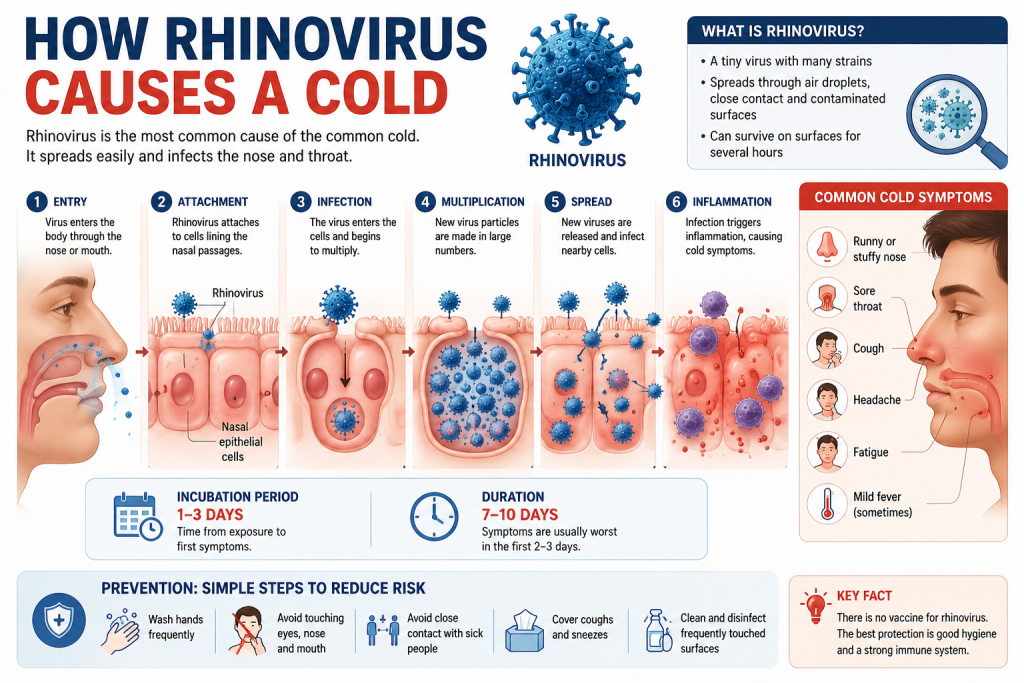
When the rhinovirus enters the body through the nose, it immediately meets a line of specialised immune cells lining the nasal passage. In people who rarely get colds, these cells activate quickly and trigger an antiviral defence cascade, a chain of signals that targets the virus and warns surrounding healthy cells to prepare. The infection is stopped before it takes hold.
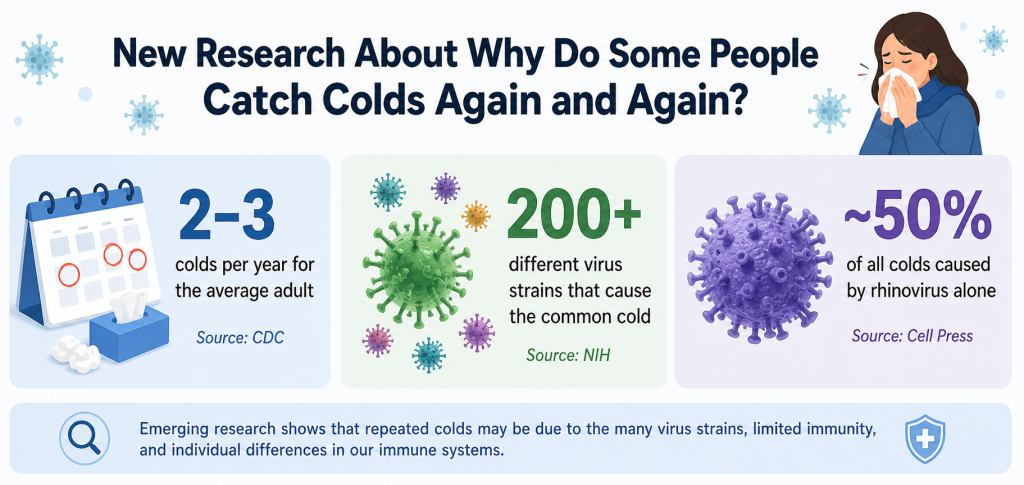
About the Research: A 2026 study published in Cell Press Blue created a laboratory model of the human nasal passage using real nasal stem cells grown over four weeks. Researchers exposed these cells to rhinovirus — the most common cold-causing virus and tracked exactly how different immune responses either stopped the infection or allowed it to spread. This is the most detailed cellular-level study of cold susceptibility published to date.
In people who get frequent colds, this first-response system is slower or weaker. The virus gets a critical head start. It multiplies in the nasal lining, spreads to healthy cells before the immune signal reaches them, and triggers the inflammation that causes the familiar symptoms: a runny nose, sore throat, and that heavy feeling in the head. Crucially, when this defence fails to activate, the virus can also spread from the nose into the airways, increasing both inflammation and the risk of breathing complications.
Key Insight: The researchers found that the body’s response to the virus matters more than the virus itself. Two people exposed to exactly the same viral load can have completely different outcomes based purely on how fast their nasal immune cells activate. This means frequent colds are often a solvable problem, not an unchangeable trait.
Why You Can’t Build Immunity to Colds: The Rhinovirus Problem
Here is a question worth asking: if you have had dozens of colds in your life, why hasn’t your body built immunity to them? The frustrating answer lies in sheer numbers.
Over 200 different viruses can cause the common cold, and the rhinovirus alone has more than 160 known strains. As Dr. Ron Eccles, former Director of the Common Cold Centre at Cardiff University, has explained, the diversity of cold viruses means immunity to all of them is simply not possible within a human lifespan. Your immune system builds strong memory against each strain it meets, but in a world where new variants circulate constantly, repeat infections are biologically inevitable. This is the fundamental reason there is no cold vaccine, and why catching colds repeatedly is not necessarily a sign that something is wrong with your immunity specifically.
However, and this is the important point, the frequency and severity of your colds are still heavily influenced by factors within your control. People with strong nasal antiviral responses get infected less often and recover faster, even when exposed to new strains. The goal is not immunity to every strain; it is strengthening the first-response mechanism that slows the virus down while your body catches up.
Read Also: How to Boosting Immune System
The 6 Main Reasons Some People Get Frequent Colds
Here is the list of six reasons some people get frequent colds:
- Insufficient sleep
- Chronic stress
- Dry indoor air
- Smoking or air pollution
- Zinc or vitamin D deficiency
- Underlying conditions that suppress immunity
Let’s discuss every reason in detail:
1. Insufficient sleep
A landmark study by Dr. Aric Prather of the University of California, San Francisco, published in the Sleep journal (2015), found that people sleeping fewer than six hours per night were four times more likely to catch a cold even after controlling for stress levels, smoking history, and income. This is one of the strongest causal links between sleep and cold susceptibility ever documented. Sleep is when the body produces cytokine proteins that fight infection and inflammation. Consistently short sleep suppresses this production, leaving the nasal immune response significantly slower to activate when a virus arrives.
2. Chronic stress
Long-term stress raises cortisol levels in the blood. Elevated cortisol directly suppresses immune cell activity, including the nasal antiviral cells identified in the Cell Press study. Research from Carnegie Mellon University found that people with high stress scores were significantly more likely to develop a cold after direct exposure to a cold virus. This is not about personality; it is a documented biological mechanism that anyone can experience.
3. Dry air and indoor heating
Cold viruses survive longer and travel further in dry air. More critically, low humidity dries out the mucous membranes in the nose, the first physical barrier against viral entry. When these membranes are dry, rhinovirus particles attach to nasal cells far more easily. This is particularly relevant in Pakistan during winter months, when indoor gas heating and low outdoor humidity create ideal conditions for transmission.
4. Smoking and air pollution exposure
Both active smoking and regular exposure to heavy air pollution are significant factors in Pakistani cities that damage the cilia in the nasal passage. These tiny hair-like structures physically sweep viral particles away before they can attach to cells. When cilia are damaged, the virus reaches the nasal lining unchallenged. Smokers experience colds that are more frequent, longer, and more severe than non-smokers across every age group studied.
5. Poor nutrition: specifically, low zinc and vitamin D
Zinc deficiency is one of the most direct causes of impaired immune response. Zinc is essential for the development of the immune cells that form the nasal antiviral defence.
Vitamin D deficiency is paradoxically widespread in Pakistan. A study in the Journal of the Pakistan Medical Association found that over 70% of Pakistani adults tested had insufficient vitamin D levels despite year-round sunshine, primarily because most daily activity occurs indoors and full clothing significantly limits skin exposure. This deficiency directly suppresses the immune cell function that forms the first-line nasal defence against cold viruses.
Read Also: Daily Vitamin D Supplements
A 2017 meta-analysis of 25 clinical trials in the British Medical Journal confirmed that vitamin D supplementation reduced respiratory infection rates across all age groups.
6. Underlying conditions that suppress immunity
Certain medical conditions reduce immune function in ways that directly increase cold frequency. These include uncontrolled diabetes (high blood sugar impairs immune cell activity), autoimmune conditions, ongoing chemotherapy, and chronic allergic rhinitis, which keeps the nasal passage in a state of low-grade inflammation that makes it easier for cold viruses to establish an infection. If you have one of these conditions and are getting frequent colds, better management of the underlying condition is typically more effective than cold-specific remedies.
Prevention That Actually Works
The table below shows evidence-based prevention steps ranked by how strongly the research supports them. Focus on the highly effective actions first; they address the biological mechanisms identified in the Cell Press study most directly.
| Prevention Action | Effectiveness | How It Helps |
|---|---|---|
| Sleep 7–9 hours consistently | High | Restores immune cell production; directly speeds up the nasal antiviral response identified in the 2026 research |
| Handwashing with soap for 20 seconds | High | Rhinovirus survives on surfaces for up to 24 hours; handwashing breaks the transmission chain before nasal exposure occurs |
| Avoid touching eyes, nose, and mouth | High | Most cold transmission is hand-to-face, not airborne; this habit alone can significantly reduce exposure |
| Vitamin D supplementation if deficient | High | Restores immune function; particularly important in Pakistan where indoor lifestyles create widespread deficiency |
| Zinc-rich foods or supplementation | High | Directly supports nasal immune cell function; zinc taken within 24 hours of first symptoms also reduces cold duration |
| Use a humidifier in winter | Medium | Keeps nasal membranes moist and functional, reducing the viral attachment window during cold dry months |
| Manage chronic stress actively | Medium | Reduces cortisol suppression of immune cells over time; effects are gradual but clinically measurable |
| Regular moderate exercise | Medium | Improves immune surveillance; note that intense overtraining temporarily suppresses immunity instead |
⚠️What Does Not Work: High-dose vitamin C does not reduce cold frequency in the general population — multiple large trials have confirmed this. Antibiotics have zero effect on cold viruses; they are bacterial medicines. This is especially worth noting in Pakistan, where antibiotic use for colds is contributing to antibiotic resistance. Save antibiotics for confirmed bacterial infections only.
Read Also: Natural Remedies for Allergies
How Long Should a Cold Last?
A typical uncomplicated cold lasts seven to ten days in adults. The first two to three days are the most intense, with peak symptoms of congestion, sore throat, and fatigue. By day four or five, most people begin improving, though a mild cough and runny nose can persist into the second week.
Several behaviours prolong a cold significantly. Continuing to exercise intensely forces the body to divide resources between fighting the virus and maintaining physical output, which slows recovery. Not drinking enough fluids allows mucous to thicken, making it harder to clear the virus. Poor sleep during the illness is particularly damaging, as recovery happens primarily during deep sleep.
In children, colds often last up to two weeks, and symptoms can be more intense. This is expected; children’s immune systems are still building their viral response library. Frequent colds in children are not necessarily a cause for concern unless accompanied by the warning signs described below.
🔴 When to See a Doctor
The following guidance is based on clinical recommendations from the WHO, NHS, and Pakistan Ministry of National Health Services for respiratory infections. If you are unsure about any symptom, always consult a qualified doctor rather than relying solely on online information. Most colds resolve without medical treatment. But certain symptoms and patterns are red flags that require professional evaluation, not a home remedy.
- Your cold lasts more than 10 days with no improvement, or symptoms worsen after day 5. This can indicate a secondary bacterial infection, such as sinusitis or an ear infection
- You develop a fever above 39°C (102°F). Cold viruses rarely cause high fever; this suggests a more serious infection
- You experience chest pain, difficulty breathing, or a crackling sound when you breathe
- You are getting four or more colds per year. This frequency warrants blood tests to check zinc, vitamin D, and general immune function
- A new cold begins within two to three weeks of recovering from the last one — this pattern strongly suggests an underlying immune issue that needs evaluation
- For children: a cold accompanied by ear pain, difficulty swallowing, or any rash requires prompt medical review
The Bottom Line: Frequent colds happen when the body fails to mount a fast, strong antiviral response in the nasal passage within the first hours of rhinovirus exposure. This response is improvable — primarily through consistent sleep, reduced chronic stress, adequate zinc and vitamin D, and simple transmission-breaking habits like thorough handwashing and not touching your face.
Final Thoughts
Catching colds is unavoidable, as over 200 viruses circulate constantly, and no immunity covers all of them. But getting frequent colds, or colds that are unusually severe and prolonged, is not something you simply have to live with. The 2026 Cell Press research confirms what immunologists have suspected for years: the quality of your nasal antiviral response is the deciding factor, and that response is directly shaped by sleep, stress, nutrition, and environmental habits within your control.
Start with the basics: consistent sleep, regular handwashing, and getting your vitamin D levels checked if you haven’t done so recently. These three changes, applied consistently over two to three months, are likely to reduce both the frequency and severity of your colds more than any supplement marketed specifically for “immunity.”
This article was written by Saira Imran. She is a professional content writer and digital storyteller contributing to AjjKiBaat. She specializes in creating clear, engaging, and research-driven articles that simplify complex topics for everyday readers.
Updated May, 2026
FAQs
Research published in Cell Press Blue (2026) shows the key difference is the speed and strength of the nasal antiviral response. People whose immune cells activate quickly after virus exposure can stop the infection before it takes hold.
Adults average 2–3 colds per year; children average 6–8. Getting more than 4 colds per year as an adult is above average and worth discussing with a doctor. A blood test checking vitamin D, zinc, and general immune markers is a reasonable first step.
Can the same cold virus infect you twice?
Yes, but typically only after several years. Your immune system builds specific memory against rhinovirus strains it has encountered. However, with over 160 rhinovirus strains plus dozens of other cold-causing viruses in circulation, you will keep encountering new strains throughout your life.
Not directly. Cold temperatures themselves do not cause infections; a virus does. However, cold weather increases cold frequency for two indirect reasons: people spend more time indoors, and cold, dry air.
Does vitamin C actually prevent colds?
High-dose vitamin C does not prevent colds in the general population. Multiple large clinical trials have confirmed this. It may slightly reduce cold duration (by about half a day on average) in people who take it regularly before getting sick.
Is it safe to exercise when you have a cold?
Light exercise, such as a short walk or gentle stretching, is generally fine if your symptoms are above the neck only (runny nose, mild sore throat). If you have a fever, chest symptoms, body aches, or significant fatigue, rest completely.
What is the fastest way to recover from a cold?
Rest and sleep as much as possible. This is the single most effective action. Stay well hydrated to keep nasal secretions thin. Zinc lozenges taken within 24 hours of first symptoms have clinical evidence for reducing cold duration.