Saira Imran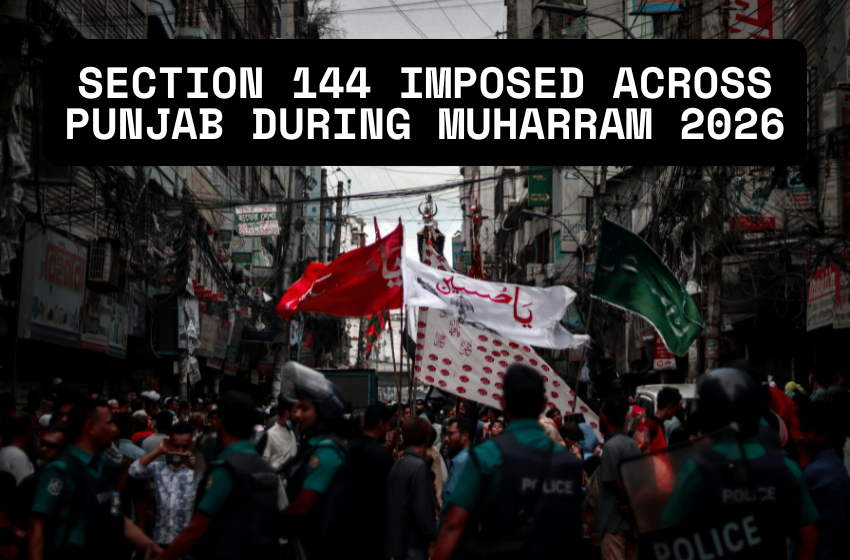
Section 144 Imposed Across Punjab During Muharram 2026
The Punjab government has imposed Section 144 across the entire province during Muharram ul Haram 2026. The order takes effect from June 17 and remains in force until June 26, 2026.
If you live in Punjab, this order affects your daily movement and public behavior. Here is everything you need to know.
What is Section 144, and why is it imposed now?
Section 144 is a legal order under the Code of Criminal Procedure. It gives authorities the power to restrict gatherings, movement, and certain activities in public spaces. Violating it is a criminal offense.
The Punjab Home Department issued the official notification on June 17. The reason is clear: Muharram ul Haram is a sensitive religious period. Authorities want to prevent sectarian violence, maintain peace, and ensure that processions and gatherings remain safe.
The Section 144 order covers all of Punjab from 1st Muharram to 10th Muharram 2026.
7 Restrictions Under Section 144 in Punjab
The Home Department has listed seven specific bans under this order. Each one targets a different type of risk.
1. Allow Only Approved Processions and Gatherings
No new procession or religious gathering can take place without prior official approval. Authorities only permit events and gatherings that are already registered and officially approved. They do not allow any new event or tradition introduced this year.
2. Ban on Weapons and Flammable Materials in Public
No one can display or carry weapons, firearms, or flammable materials in any public space during this period. This requires prior permission from the competent authority. The ban applies to all public areas across Punjab.
3. Authorities Prohibit Provocative Slogans and Statements
No one can use any slogan, gesture, statement, or commentary that may hurt religious sentiments or trigger sectarian tension. This applies to speeches, banners, and social media posts made in public. Authorities will treat such acts as violations of Section 144.
4. Ban on Sectarian and Ethnic Hatred Content
No one can publish, distribute, or promote material that spreads hatred between religious or ethnic groups. This includes printed material, audio content, and anything shared in public gatherings.
5. No Stockpiling on Rooftops Along Procession Routes
Buildings located along procession routes are under special restrictions. No one is allowed to collect or stockpile stones, bricks, bottles, or any other objects on rooftops, as this could be used for attacks from elevated positions.
6. No Spectators on Rooftops or Shop Steps Along Routes
People cannot gather on rooftops or sit on shop platforms along procession routes as spectators. This restriction reduces risk and makes crowd management easier for law enforcement.
7. Pillion Riding Ban on 9th and 10th Muharram
The pillion riding ban applies only on 9th and 10th Muharram, which fall on June 25 and 26. Two people cannot ride a motorcycle together on these two days.
However, three groups are exempt from this ban: elderly citizens, women, and personnel from law enforcement agencies.
Why These Restrictions Matter for You?
If you are a resident of any Punjab city including Lahore, Faisalabad, Multan, Rawalpindi, Gujranwala, or Sialkot, these rules apply to you directly.
Here is how your daily routine could be affected this week.
- Your commute may face disruptions: As authorities deploy heavy security on major roads near procession routes, your commute may face disruptions. Plan extra travel time on 8th, 9th, and 10th Muharram.
- You cannot ride pillion on June 25 and 26: If you normally travel with a family member on a motorbike, make separate arrangements on those two days. The exemption for women and elderly people gives some flexibility, but enforcement will be strict.
- Your business premises along procession routes face extra checks: If your shop or house is on a procession route, security forces may inspect your rooftop or building approach.
- Social media activity may create legal issues: Authorities may treat any online content that provokes sectarian sentiment as a violation of Section 144. Be careful about what you share during this period.
What Happens If You Violate Section 144?
Violating Section 144 is a punishable offense under Pakistani law. Police can arrest a person without a warrant if they breach this order. The maximum punishment is one month in jail, a fine, or both.
During Muharram, enforcement tends to be strict. Security agencies deploy large numbers of personnel across sensitive areas. Do not assume the restriction is informal or advisory. It carries legal weight.
What Is the Government Asking From the Public?
The Punjab Home Department has directed relevant institutions to publicize this order widely. The government wants maximum public awareness before major processions begin.
Officials are urging residents to cooperate with security personnel. They want the public to report suspicious activity near procession routes and to avoid unnecessary movement in sensitive areas on 9th and 10th Muharram.
The government has not named any specific threat. But the scale of this notification, covering all seven types of restrictions and all of Punjab, suggests authorities are treating this year as a high-alert period.
How Does This Affect Muharram Processions Across Punjab?
Major Muharram processions in Pakistan take place in multiple cities. In Lahore alone, dozens of registered processions move through the old city, Data Darbar area, and other neighborhoods. In Multan, Rawalpindi, and Sargodha, large gatherings mark the first ten days of Muharram.
All of these will continue as planned under Section 144. The restriction is not banning Muharram. Authorities manage public observance of Muharram in a controlled manner to prevent violence and maintain order in public spaces.
Organizers of approved processions must coordinate with local administration and police. They must follow the approved routes, timing, and crowd management protocols.
What to Expect in the Coming Days?
The most sensitive days are 8th, 9th, and 10th Muharram, which fall on 24, 25, and 26 June 2026; that’s why the government imposed Section 144 in Punjab. Security deployments will be heaviest on these three days. Authorities may suspend mobile services in certain areas depending on the security situation.
The government typically makes decisions about mobile network suspensions closer to the date. Watch for official announcements from the Punjab Home Department or Pakistan Telecommunication Authority.
For now, the message from Punjab authorities is clear: follow the restrictions, respect the order, and let the official processions proceed peacefully.