Saira Imran
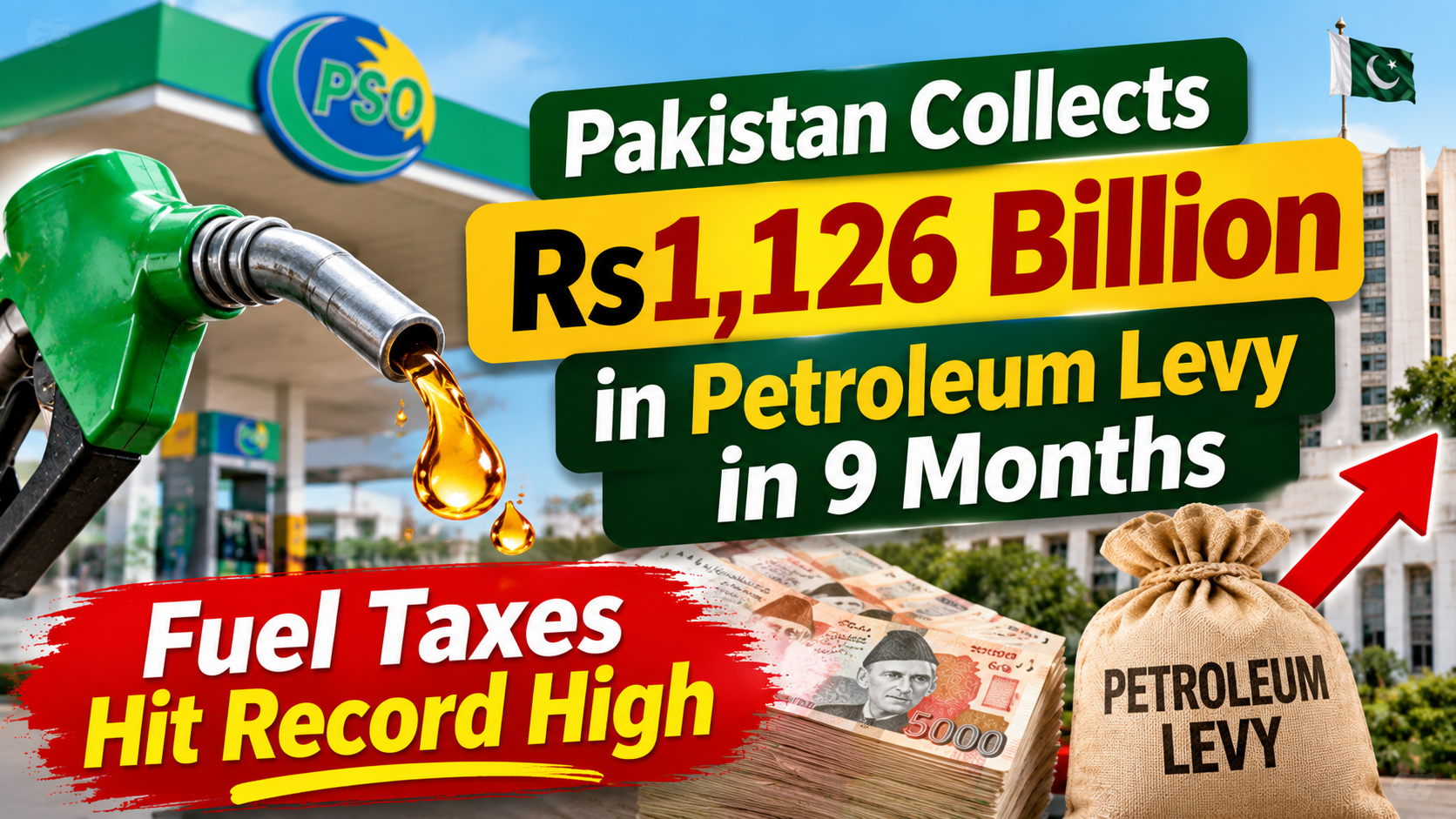
Pakistan Collects Rs1,126 Billion in Petroleum Levy
The federal government collected Rs1,126.34 billion through the petroleum levy during the first nine months of 2026. The amount came from taxes imposed on petroleum products sold across Pakistan.
The government also collected around Rs47 billion through the Climate Support Levy during the same period. This brings the combined collection from both levies to approximately Rs1,173.27 billion between January and September 2026.
The figures show how much revenue the government has collected from fuel consumers in just nine months. They also raise concerns about the growing cost of petrol and diesel for ordinary households.
According to official data reported by The Express Tribune, petroleum levy collection increased by 8.05% compared with the same period in 2025. The government collected Rs1,042.41 billion during January to September last year.
Petroleum Levy Collection Increases by Rs83.93 Billion
The government collected Rs1,126.34 billion in petroleum levy from January to September 2026. This was Rs83.93 billion more than the Rs1,042.41 billion collected during the same nine months of 2025.
The quarterly figures also show substantial collections throughout the year.
- January to March 2026: Rs382.56 billion
- April to June 2026: Rs362.27 billion
- July to September 2026: Rs382.56 billion
The third quarter recorded the same collection as the first quarter. These figures show that petroleum levy revenue remained high throughout the first nine months of the year.
Source: Nation.com
Government Collects Rs47 Billion Through Climate Support Levy
Apart from the petroleum levy, the government collected another Rs46.93 billion through the Climate Support Levy between January and September 2026.
This levy applies separately to petroleum products. The government introduced it as part of its climate-related revenue measures.
The combined collection from the petroleum levy and Climate Support Levy reached Rs1,173.27 billion during the nine-month period.
Both charges increase the amount collected from petroleum products. As a result, fuel consumers carry part of the cost through the prices they pay at petrol pumps.
How Much Petroleum Levy Do Consumers Pay?
The government currently imposes a petroleum levy of Rs80 per litre on petrol and high-speed diesel.
For petrol, the Rs80 charge includes Rs62.94 per litre collected through retail outlets and Rs17.06 per litre paid by refineries as a differential levy.
High-speed diesel also carries a petroleum levy of Rs80 per litre. In addition, consumers face a separate Climate Support Levy of Rs5 per litre on both petrol and diesel.
These charges form part of the government’s revenue collection from petroleum products. They also add to the financial pressure on people who depend on private vehicles and transport services.
Petroleum Levy Revenue Goes to the Federal Government
The petroleum levy is classified as non-tax revenue. The federal government keeps the entire amount collected through this charge.
This arrangement differs from Federal Board of Revenue (FBR) tax collections. Under the National Finance Commission (NFC) Award, provinces receive 57.5% of the divisible pool of federal taxes.
The petroleum levy does not follow the same sharing arrangement. Therefore, the federal government retains the revenue collected through it.
The government has set a target of collecting around Rs1,727 billion through petroleum and climate support levies during the current fiscal year.
Petroleum Levy Collection Has Increased Over the Years
Government figures show a steady rise in petroleum levy revenue over recent fiscal years.
| Fiscal year | Petroleum levy collection |
|---|---|
| 2022-23 | Rs580 billion |
| 2023-24 | Rs1,019 billion |
| 2024-25 | Rs1,220.21 billion |
| 2025-26 | Rs1,567.45 billion |
The government collected Rs50.16 billion separately through the Climate Support Levy during 2025-26.
The figures show that petroleum levy revenue has grown sharply over the past few years. The latest nine-month collection also indicates that fuel remains a major source of federal government revenue.
What Does This Mean for the Public?
Higher petroleum levy collections reflect the amount of revenue the government receives from fuel-related charges. For consumers, these charges contribute to the overall cost of petrol and diesel.
Fuel prices also affect transport fares, delivery costs and the prices of goods. Therefore, changes in petroleum charges can affect household budgets and business expenses.
The latest figures cover January to September 2026. The government has yet to release the final collection figures for October to December.
The federal government’s petroleum and climate support levy target stands at around Rs1,727 billion for the current fiscal year. The remaining months will show whether total collections reach that target.