Saira Imran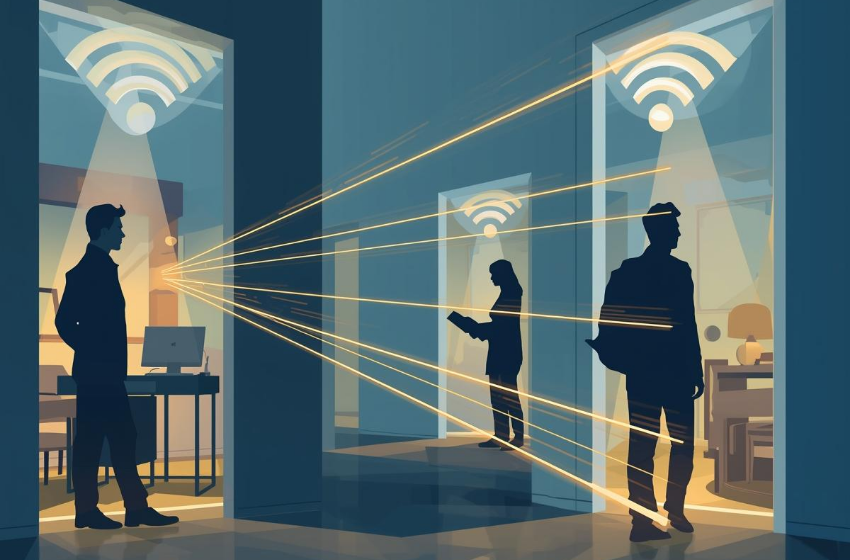
WiFi Can See Through Walls, New Research Reveals
WiFi can see through walls, according to new research. Scientists say WiFi signals can now detect human presence and movement, even from behind walls.
Researchers revealed that everyday WiFi signals can sense where people stand and how they move inside a room. The study highlights a major shift in how wireless technology works.
In 2022, researchers at Carnegie Mellon University developed this method. They used normal WiFi signals to track human position and motion with high accuracy.
This technology can change home security, elderly care, and emergency search operations. However, it also raises serious privacy concerns.
Read Also: PTA Crackdown Against Cyber Fraud, Millions of SIMs Blocked
Scientists upgraded existing WiFi routers with deep learning algorithms. These systems study how WiFi signals bounce off the human body and nearby objects.
Unlike cameras or LiDAR-based motion sensors, this method needs no extra hardware. It can turn any home or office into a basic motion-sensing system.
The system analyzes distortions in WiFi signals as they pass through or around the human body. A neural network then converts these signal changes into 3D silhouettes. This process helps identify actions like sitting, standing, or moving behind walls.
Researchers say the system can help monitor elderly people and detect unusual activity at home. Since it does not use cameras, it offers limited privacy protection.
Another key benefit is cost. Most homes already have WiFi routers. The system only needs software processing, which makes it suitable for low-cost smart homes and healthcare monitoring.
Despite these benefits, experts warn about ethical and privacy risks. Misuse of this technology could allow constant tracking of people using only WiFi signals.
The research team says the technology is still in early stages. They clarify that they did not design it for secret surveillance. Still, they admit misuse remains a real risk.
The Carnegie Mellon team is now working on privacy protection features. Their goal is to ensure safe and responsible use, especially in sensitive environments.
If this technology succeeds, it can transform home security, elderly care, emergency rescue, and affordable smart homes. However, strong legal and ethical limits must apply, as WiFi can see through walls and may threaten personal privacy.